Main page content
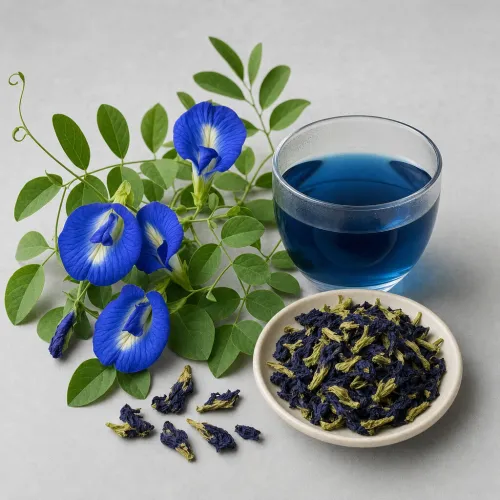
Butterfly pea (Clitoria ternatea) is a climbing vine of South-East Asia whose vivid blue flowers brew a sapphire-blue tea that turns violet-pink with a squeeze of lemon. In Thailand it is dok anchan; in Ayurveda it is Aparajita.
Key Benefits of Butterfly Pea Flower
- Its blue colour comes from ternatins, unique anthocyanin antioxidants.
- Ayurveda counts it among the medhya herbs — tonics for memory and the mind.
- Traditionally used to calm stress and support sleep.
- Used in South-East Asia for hair and eye health.
Butterfly pea is proof that medicine can also be magic — a cup that changes colour in your hand.
Traditional Chinese Medicine (TCM) Perspective
- Chinese Name: Dié Dòu Huā (蝶豆花)
- Nature & Flavor: Cool; Sweet, Slightly Bitter
- Meridians Entered: Heart, Liver
- Key TCM Actions: Clears Heat, calms the spirit, brightens the eyes.
Modern Chinese herbal practice treats butterfly pea as a cool, calming flower — closest in spirit to Ayurveda's use of Aparajita as a brain and nerve tonic.
- 1 tsp flowers in a cup of hot water, 5 minutes — deep blue.
- Add lemon juice and watch it turn purple.
Before you use this: Butterfly pea is gentle; use in food-like amounts during pregnancy and nursing. The information on this page is for educational purposes only and does not constitute medical advice. Every person's health is unique — before incorporating any herb or botanical into your routine, especially if you are pregnant, nursing, managing a health condition, or taking prescription medications, please consult a qualified integrative health professional.

Share this with your friends 🙏


