
Main page content
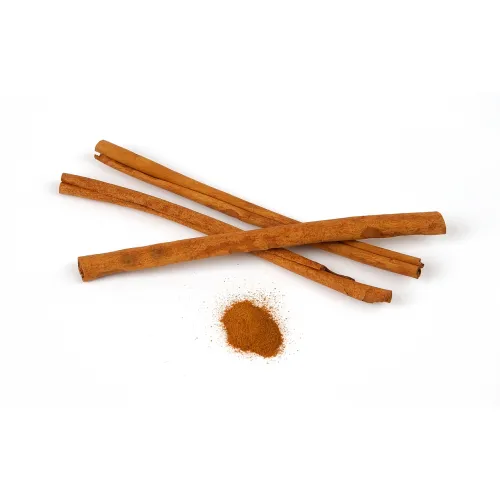
Cinnamon bark (Cinnamomum verum or C. cassia bark) is the raw source from which both cinnamon essential oil and ground cinnamon are derived — and it is the bark itself that concentrates the highest levels of bioactive compounds. The essential oil steam-distilled from cinnamon bark is among the most potent of all spice oils, carrying a rich, deep, intensely warming aromatic profile with broad therapeutic applications.
Key Benefits of Cinnamon Bark
- The highest natural source of cinnamaldehyde — the compound responsible for cinnamon's characteristic warming, anti-inflammatory, and antimicrobial action. (PubMed reference)
- Deeply circulatory and warming — topical application dramatically increases local blood flow, making cinnamon bark oil a powerhouse in sports balms and warming joint formulas.
- Demonstrated broad-spectrum antimicrobial activity against bacteria, fungi, and viruses — one of the most studied spice oils for its infection-fighting potential.
- Used in traditional Ayurvedic and Chinese medicine as a potent Kapha- and cold-reducing herb — prescribed for cold-type pain, poor circulation, and stiffness.
- Contains eugenol alongside cinnamaldehyde — adding a secondary analgesic compound that works synergistically to deepen pain relief.
- The intensely spicy, deep aromatic note of cinnamon bark is used in luxury perfumery and body care for its warmth, depth, and timeless appeal.
- High potency requires dilution — cinnamon bark oil is used at low concentrations in professional formulations to deliver its benefits safely and effectively.
Cinnamon bark is among the most potent warming botanicals known to herbalism. Respected for its power and used with craft, it delivers deep, satisfying heat and genuine therapeutic benefit that transforms a simple balm into something truly medicinal.
Traditional Chinese Medicine (TCM) Perspective
Cinnamon Bark encompasses both Ròu Guì (肉桂 — inner bark for deep tonic use) and Guì Zhī (桂枝 — twig for surface and channel work). Together these two forms of cinnamon cover the broadest range of warming, channel-opening actions in TCM.
- Chinese Name: Rou Gui (肉桂) / Gui Zhi (桂枝)
- Nature & Flavor: Hot (Rou Gui) / Warm (Gui Zhi); Pungent, Sweet
- Meridians Entered: Heart, Kidney, Liver, Spleen, Bladder (Gui Zhi)
- Key TCM Actions: Warms Yang and disperses Cold, unblocks meridians, invigorates Blood and Qi circulation, relieves pain, harmonizes Wei (Defensive) and Ying (Nutritive) Qi levels (Gui Zhi).
Gui Zhi (桂枝) is the twig form — lighter, more outward-moving, and specifically suited to releasing Cold from the muscles and channels. It is the chief herb in Guì Zhī Tāng, the foundational formula for Wind-Cold with deficiency. Applied topically, cinnamon bark creates the warming, penetrating sensation that TCM identifies as "channels being opened and Cold being dispersed."
The bark form allows for decoction — a simmering extraction that pulls significantly more cinnamaldehyde and procyanidins into solution than simple hot-water steeping. Traditional Chinese Medicine uses 3–9 g Rou Gui (inner cinnamon bark) as a decoction for circulatory and Yang-deficiency conditions. The bark's volatile oil content is highest in the inner layer of 2–3 year old branches.
Warming Cinnamon Bark Decoction
- One 3–5 g cinnamon bark stick in 400 ml cold water.
- Bring to a gentle simmer; cook uncovered on the lowest heat for 20 minutes.
- Add 3 slices fresh ginger in the last 5 minutes.
- Strain, add honey, drink warm in the morning.
Research note: Start with cold water — beginning with boiling water causes cinnamaldehyde to volatilise before it can dissolve into the liquid. The 20-minute simmer extracts 3–4× more active compounds than a 5-minute steep. This decoction method is particularly suited to the circulatory-warming action (peripheral vasodilation) that differentiates cinnamon bark therapeutics from Ceylon cinnamon powder supplementation.
Before you use this: If using cassia bark rather than Ceylon, coumarin limits apply — see the cassia entry. This decoction is warming and stimulating; avoid in conditions of excess interior Heat (persistent fever, inflammatory flares, bleeding disorders). Not recommended during pregnancy at therapeutic doses — cinnamon bark stimulates uterine circulation. Those with bleeding disorders or on anticoagulants should avoid regular high-dose bark preparations. The information on this page is for educational purposes only and does not constitute medical advice. Every person's health is unique — before incorporating any herb or botanical into your routine, especially if you are pregnant, nursing, managing a health condition, or taking prescription medications, please consult a qualified integrative health professional.


