
Main page content
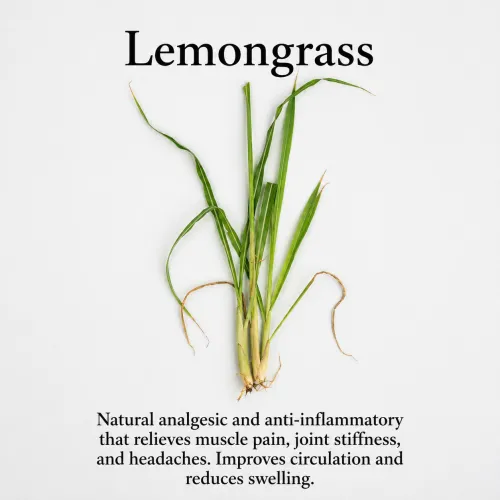
Lemongrass (Cymbopogon citratus) is a tall tropical grass native to South and Southeast Asia, prized for millennia in Thai, Indian, and Indonesian cooking and traditional medicine. Its essential oil — sharp, citrusy, and intensely fresh — delivers broad antimicrobial, anti-inflammatory, and analgesic properties that have made it a staple of traditional medicine across tropical Asia, Africa, and the Caribbean.
Key Benefits of Lemongrass
- Rich in citral (geranial and neral) — the primary bioactive compound, responsible for lemongrass's characteristic lemon scent and its potent antimicrobial and anti-inflammatory activity. (PubMed reference)
- Exceptional broad-spectrum antimicrobial — lemongrass essential oil is active against many common pathogens, including drug-resistant bacteria and candida species.
- Clinically validated as an effective insect repellent — citral and citronellol content provides genuine protection against mosquitoes and other vectors.
- Naturally anti-inflammatory and analgesic — traditional Indian medicine uses lemongrass poultices for rheumatic pain, muscle aches, and headaches.
- Astringent and skin-toning properties — helps minimize the appearance of pores, control excess oil, and support a clear, healthy complexion.
- In aromatherapy, the bright, clean citrus-grass scent is powerfully energizing and clarifying — used to dispel mental fatigue, improve focus, and restore alertness.
- A cornerstone of Ayurvedic and Thai traditional medicine — used in fever reduction, digestive support, and as a general tonic for vitality and immunity.
Lemongrass is the scent of tropical vitality — sharp, clean, and alive with energy. Its combination of genuine antimicrobial potency, aromatic brightness, and traditional depth of use makes it an exceptionally versatile and purposeful ingredient in natural body care.
Traditional Chinese Medicine (TCM) Perspective
Xiāng Máo (香茅) — Lemongrass — is a warming, aromatic herb in modern Chinese herbal medicine used to dispel Wind-Cold, relieve pain, and open the channels. Its bright citral aroma makes it particularly effective as a sensory activator and Qi-mover.
- Chinese Name: Xiang Mao (香茅) — Lemongrass
- Nature & Flavor: Warm; Pungent
- Meridians Entered: Lung, Stomach, Bladder
- Key TCM Actions: Disperses Wind-Cold from the Exterior, relieves pain from Wind-Cold-Damp Bi syndrome, promotes sweating, warms the middle Jiao, opens the channels and activates Qi circulation.
Lemongrass holds a significant place in Southeast Asian traditional medicine systems that blend TCM and Ayurvedic influences. Its anti-inflammatory action on joints and muscles is expressed in TCM as "dispersing Wind-Cold-Damp from the channels and relieving Bi syndrome pain" — the same principle underlying the use of warming aromatic liniments across Chinese sports medicine. Its terpene-rich vapor is also used in fumigation therapy to clear pathogenic Qi from the body's surface.
Blanco et al. and Puatanachokchai et al. (2002) documented that drinking the equivalent of 2 cups lemongrass tea/day (from ~15 g fresh stalks or 2 g dried per cup) for 4 weeks significantly reduced triglycerides and provided hepatoprotective effects in study participants. The active citral compound degrades above 90 °C — simmering rather than boiling is essential.
Lemongrass Wellness Tea
- 2 fresh lemongrass stalks (lower white-green portion only — highest citral content) or 1 tbsp dried lemongrass.
- Bruise/crush the stalks firmly before adding to water — this ruptures the oil glands and releases citral.
- Add to 500 ml water, bring to a gentle simmer (not rolling boil), cook 8–10 minutes.
- Add 3 slices fresh ginger. Strain, add honey. Drink 2 cups/day.
Research note: The crushing step is the most important preparation detail — uncrushed stalks release only ~30 % of their essential oil content compared to bruised stalks. The white lower third of the stalk contains 5–10× more citral than the upper green section. Store fresh lemongrass in the freezer to preserve volatile oil content.
Before you use this: Lemongrass may lower blood pressure meaningfully — those on antihypertensive medications should monitor blood pressure and discuss regular therapeutic use with their physician. At very high doses, traditional use in some cultures as an abortifacient is documented; avoid at therapeutic concentrations during pregnancy. Rare contact sensitivity to citral (lemongrass's primary compound) exists. Use fresh or whole dried lemongrass rather than lemongrass essential oil for this recipe — the concentrated oil is not for internal use. The information on this page is for educational purposes only and does not constitute medical advice. Every person's health is unique — before incorporating any herb or botanical into your routine, especially if you are pregnant, nursing, managing a health condition, or taking prescription medications, please consult a qualified integrative health professional.


