
Main page content
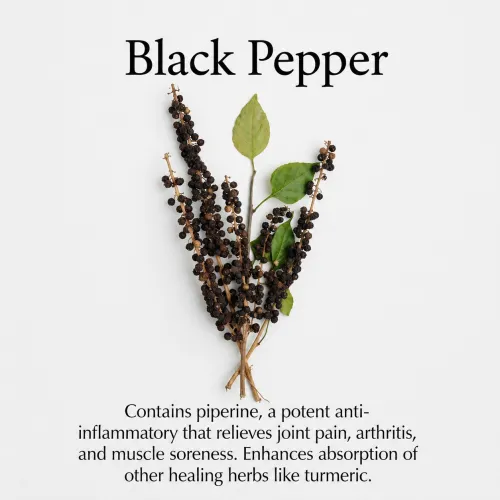
Black pepper (Piper nigrum) is the world's most traded spice — and one of the most underappreciated therapeutic botanicals in natural skincare and pain relief. The essential oil of black pepper, rich in piperine and terpenes, delivers a remarkable warming, circulatory, and analgesic effect that has been exploited in Ayurvedic medicine for over 2,000 years. It also has a remarkable ability to enhance the bioavailability of other active compounds.
Key Benefits of Black Pepper
- Piperine, the primary active alkaloid, has been shown to significantly enhance the absorption of other botanical actives (particularly curcumin from turmeric) — making it a powerful bioavailability enhancer in compound formulations. (PubMed reference)
- Powerfully warming and circulatory — increases local blood flow when applied topically, helping deliver oxygen and nutrients to muscles and joints while flushing out metabolic waste.
- Provides genuine analgesic relief for muscle aches, stiff joints, and exercise soreness through its anti-inflammatory compounds.
- In aromatherapy, black pepper essential oil is used to stimulate, energize, and sharpen mental focus — traditionally used to overcome fatigue and mental fog.
- Naturally antioxidant — its terpene-rich profile helps protect against oxidative damage to tissues and skin cells.
- Used in Ayurvedic formulations (as part of Trikatu and other blends) to stimulate digestion, circulation, and the body's natural metabolic fire (agni).
- Creates a warming sensation on the skin that signals deeper circulatory action — ideal in sports rubs, joint balms, and warming massage blends.
Black pepper is the great amplifier — it makes everything around it work better, penetrate deeper, and last longer. Its warmth and spice signal the kind of deep, circulatory relief that tired muscles and stiff joints crave most.
Traditional Chinese Medicine (TCM) Perspective
Hú Jiāo (胡椒) — Black Pepper — is a warming, penetrating herb in TCM's category of substances that expel interior Cold. It is considered one of the most strongly warming of all the culinary spices used medicinally.
- Chinese Name: Hu Jiao (胡椒) — Black Pepper
- Nature & Flavor: Hot; Pungent
- Meridians Entered: Stomach, Large Intestine
- Key TCM Actions: Warms the middle Jiao, disperses interior Cold, descends rebellious Stomach Qi, relieves pain from Cold accumulation, strengthens Spleen Yang.
In TCM, Cold in the middle Jiao produces epigastric and abdominal pain, vomiting, and loose stools — Hu Jiao directly warms and disperses this pathogenic Cold. Its piperine content also plays a critical role in herbal bioavailability: modern science confirms what TCM practitioners observed empirically — that black pepper dramatically enhances the absorption and efficacy of companion herbs, especially turmeric/curcumin, by up to 2,000%.
Piperine's primary documented value is as a bioavailability amplifier. Shoba et al. (1998) demonstrated that 20 mg piperine (approximately ¼ tsp freshly ground black pepper) co-administered with curcumin increased curcumin absorption by 2 000 %. Similar enhancement was shown for beta-carotene, selenium, and fat-soluble vitamins. Pre-ground pepper loses up to 40 % of its piperine within 3–6 months due to oxidation.
The Bioavailability Pairing Rule
- Add ¼ tsp freshly ground black pepper (~20 mg piperine) to every meal containing turmeric, fat-soluble herbs, or herbal preparations.
- For Golden Milk: combine ¼ tsp freshly ground black pepper + 1 tsp turmeric + 1 tsp coconut oil in 250 ml warm milk.
- Grind whole peppercorns fresh at each meal — this is the single most important preparation step.
Research note: The piperine content of freshly ground whole peppercorns is up to 10 times higher than typical pre-ground pepper from a jar. Piperine works by inhibiting intestinal CYP3A4 and P-glycoprotein, the two mechanisms that most aggressively limit the absorption of botanical compounds. It enhances its own companion herbs rather than acting primarily as a standalone supplement.
Before you use this: Piperine inhibits CYP3A4 and intestinal P-glycoprotein — the same mechanisms that cause grapefruit interactions. At culinary amounts (a pinch per meal) this is not clinically significant, but at concentrated supplemental doses it can meaningfully raise blood levels of cyclosporine, phenytoin, propranolol, theophylline, rifampicin, and other drugs. If you are on narrow-therapeutic-index medications, mention regular high-dose black pepper supplementation to your physician. The information on this page is for educational purposes only and does not constitute medical advice. Every person's health is unique — before incorporating any herb or botanical into your routine, especially if you are pregnant, nursing, managing a health condition, or taking prescription medications, please consult a qualified integrative health professional.


