
Main page content
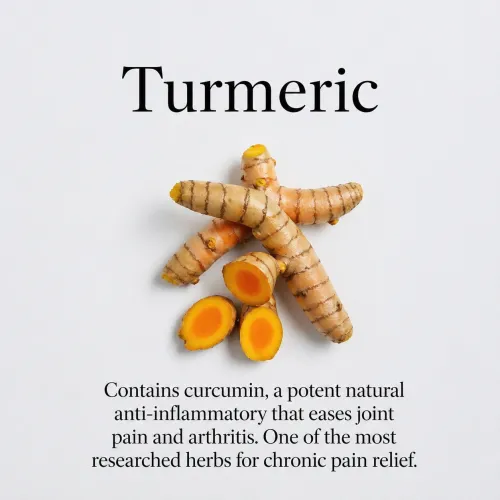
Turmeric (Curcuma longa) is arguably the world's most extensively studied anti-inflammatory botanical — a vibrant yellow rhizome from the ginger family that has been central to Ayurvedic medicine, Traditional Chinese Medicine, and South Asian culinary tradition for over 4,000 years. Its primary bioactive compound, curcumin, has generated thousands of peer-reviewed studies and is one of the most clinically credible natural anti-inflammatory agents ever identified. Topically, turmeric delivers these same benefits directly to skin, joints, and muscles.
Key Benefits of Turmeric
- Curcumin inhibits NF-κB (nuclear factor kappa B), COX-2, LOX, and TNF-α — targeting multiple simultaneous inflammation pathways in a way that no single pharmaceutical anti-inflammatory drug replicates. (PubMed reference)
- Clinically trialed for osteoarthritis, rheumatoid arthritis, and inflammatory bowel conditions — multiple systematic reviews confirm significant pain reduction and improved function with curcumin preparations.
- Powerful topical anti-inflammatory — traditional Ayurvedic application uses turmeric paste directly on inflamed joints, wounds, and skin conditions, with effects validated by modern research.
- Demonstrates significant antioxidant capacity — curcumin scavenges free radicals, induces endogenous antioxidant enzymes, and protects cellular DNA from oxidative damage.
- Used for wound healing and skin brightening in South Asian beauty traditions — turmeric is applied topically for clear, even, glowing skin in pre-wedding rituals across India and Southeast Asia.
- Synergizes powerfully with black pepper (piperine) — piperine increases curcumin's bioavailability by up to 2,000%, making the black pepper-turmeric combination one of the most important functional pairings in botanical medicine.
- Natural antimicrobial and antifungal properties — turmeric has been used topically for skin infections and wound care for millennia, with activity confirmed against many common pathogens.
Turmeric is the golden standard of botanical anti-inflammatory medicine — its curcumin profile is as close to a plant-based pharmaceutical as the botanical world offers, backed by thousands of peer-reviewed studies and 4,000 years of continuous therapeutic use across the world's great healing traditions.
Traditional Chinese Medicine (TCM) Perspective
Turmeric corresponds to Jiang Huang (姜黄) in the classical Chinese
materia medica — one of the most celebrated warming spices in TCM for moving
Blood and unblocking stagnation.
- Chinese Name: Jiang Huang (姜黄)
- Nature & Flavor: Warm; Pungent, Bitter
- Meridians Entered: Spleen, Stomach, Liver
- Key TCM Actions: Invigorates Blood, breaks up Blood
stasis, moves Qi, relieves pain, clears Wind-Damp from the channels.
TCM uses Jiang Huang primarily for painful conditions arising from
Blood stasis — including arthritis, chest pain, and traumatic injuries. Its
ability to simultaneously move both Qi and Blood makes it more forceful than
many other anti-stasis herbs. Applied topically it warms the channels and
reduces swelling; taken internally it addresses deep-seated stagnation.
Shoba et al. (1998) quantified the definitive preparation rule: combining curcumin with 20 mg piperine (¼ tsp black pepper) increases curcumin bioavailability by 2 000 %. Fat is equally critical — curcumin is fat-soluble and nearly zero bioavailability without a lipid carrier. Lao et al. (2006) human safety study confirmed 8 g/day curcumin for 3 months was safe; therapeutic effect in OA studies uses 1–2 g/day with bioavailability enhancers. Without pepper and fat, you absorb less than 5 % of curcumin.
Golden Milk (the correct version)
- 1 tsp turmeric powder (~3 g, providing ~90–100 mg curcumin)
- ¼ tsp freshly ground black pepper (~20 mg piperine)
- 1 tsp coconut oil or ghee (fat carrier)
- 250 ml full-fat oat or dairy milk
- Optional: pinch of cinnamon, ½ tsp ginger, 1 tsp honey (add after cooling slightly).
- Warm on low heat for 3–5 minutes — do not boil. Drink daily.
Research note: All three elements — turmeric, black pepper, and fat — must be present simultaneously for the synergistic absorption effect. Omitting any one of the three reduces efficacy dramatically. Studies on liposomal and nanoparticle curcumin preparations achieve even higher bioavailability, but Golden Milk with pepper and fat remains the most clinically validated whole-food preparation. Make it with the full-fat version of your chosen milk; low-fat milks significantly reduce fat-mediated absorption.
Before you use this: Turmeric at therapeutic doses (1+ g curcumin daily) can aggravate gallstone pain and is contraindicated in bile duct obstruction — it stimulates bile secretion. Curcumin has anticoagulant effects; avoid combining with warfarin, aspirin, clopidogrel, or other blood thinners without medical supervision. It may lower blood glucose; diabetics on medication should monitor when beginning daily use. At very high supplemental doses (>8 g/day), GI distress is common. Turmeric is an intense yellow dye — it permanently stains fabric, plastics, and light-coloured surfaces. The information on this page is for educational purposes only and does not constitute medical advice. Every person's health is unique — before incorporating any herb or botanical into your routine, especially if you are pregnant, nursing, managing a health condition, or taking prescription medications, please consult a qualified integrative health professional.


