
Main page content
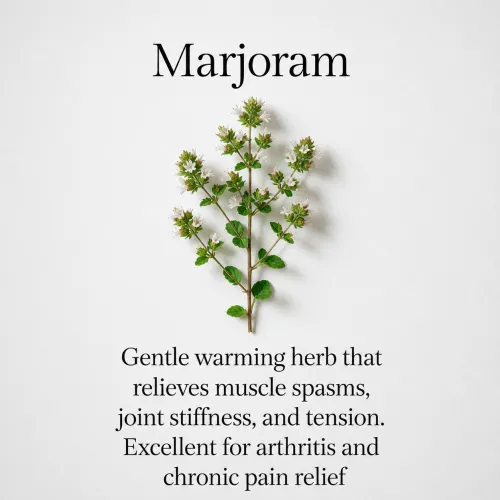
Sweet marjoram (Origanum majorana) is a gentle but deeply effective Mediterranean herb with a long history in both culinary and medicinal traditions. Related to oregano but milder and more nuanced, marjoram has been used since ancient Greece and Rome to ease muscle tension, support emotional calm, and warm the body from within. It is particularly valued for its combination of muscle-relaxant and nervine (nervous system soothing) properties — a pairing that makes it uniquely useful for stress-related physical tension.
Key Benefits of Marjoram
- Contains terpinene-4-ol, sabinene, and linalool — compounds with documented antispasmodic, anti-inflammatory, and sedative properties that work synergistically on muscle and nerve tissue. (PubMed reference)
- A gentle but effective muscle relaxant — topical marjoram oil eases muscle spasm, overuse tension, and the physical tightness that accompanies stress and fatigue.
- In aromatherapy, marjoram is the premier "warming comforter" — its rich, herbaceous, slightly sweet scent soothes grief, loneliness, anxiety, and emotional cold.
- Traditionally used as a warming herb for cold, damp conditions — in both food and medicine, marjoram was prescribed for conditions made worse by cold and improved by warmth.
- Natural analgesic properties make it effective in massage and body care products targeting sore muscles, joint stiffness, and headache tension.
- Demonstrated antimicrobial activity — like many Mediterranean culinary herbs, marjoram contains compounds active against common pathogens and supports skin health.
- A cornerstone of traditional European bath therapy — added to warming baths to ease rheumatic pain, sore muscles, and emotional exhaustion.
Marjoram is the herb of gentle, sustained warmth — for muscles, for emotions, for the cold places where tension hides. It is the perfect companion ingredient in any formulation designed to ease the physical weight that stress and overuse leave in the body.
Traditional Chinese Medicine (TCM) Perspective
Marjoram (Mǎ Yuē Lán, 马郁兰) is an aromatic warming herb whose properties in TCM correspond to the category of herbs that transform Damp, move Qi, and warm the channels. It shares functional similarity with Pèi Lán (佩兰) and other aromatic herbs that harmonize the middle Jiao.
- Chinese Name: Ma Yue Lan (马郁兰) — Marjoram
- Nature & Flavor: Warm; Pungent, slightly Bitter
- Meridians Entered: Lung, Spleen, Stomach
- Key TCM Actions: Transforms Damp and harmonizes the middle Jiao, disperses Wind-Cold, warms and opens the channels, relieves spasm and muscle tension, calms the Spirit through aromatic action.
Marjoram's antispasmodic properties — relaxing smooth and skeletal muscle — reflect the TCM action of "warming and relaxing the sinews and channels." In TCM, muscle tension and spasm are governed by the Liver (which controls the sinews) and are exacerbated by Cold and stagnation. Marjoram's warming aromatic nature both disperses the Cold and moves the stagnant Qi and Blood that maintain muscle tension — a dual action central to TCM's approach to pain and tension relief.
Hlebowicz et al. (2009) showed marjoram extract reduced post-meal blood glucose response. Commission E recognises 1–2 tsp (500 mg–1 g) dried marjoram per cup for digestive spasms and flatulence based on its thymol, carvacrol, and sabinene hydrate content. The volatile oils that provide the therapeutic digestive effect evaporate rapidly in uncovered, over-steeped preparations.
Marjoram Digestive Tea
- 1–2 tsp dried marjoram (500 mg–1 g) per 250 ml hot water.
- Steep 7–10 minutes, covered — the lid prevents volatile oils from escaping with steam.
- Add ½ tsp fennel seeds for enhanced carminative effect.
- Drink after heavy or fatty meals.
Research note: The covered steep is non-negotiable for marjoram — open steeping loses the majority of thymol and carvacrol within 3–4 minutes. Fresh marjoram contains 3–5× more volatile oil than dried by weight; if using fresh, double the quantity. Marjoram has traditionally been used to promote menstruation — avoid therapeutic doses during pregnancy.
Before you use this: Avoid therapeutic doses of marjoram during pregnancy — it is traditionally classified as an emmenagogue (stimulates menstrual flow) and its safety at supplemental doses in pregnancy has not been established; culinary cooking amounts are considered safe. Marjoram has mild anti-platelet activity at higher doses — use cautiously if on blood-thinning medications. Those with allergy to other plants in the Lamiaceae family (oregano, thyme, basil, mint) may experience cross-reactive allergy to marjoram. The information on this page is for educational purposes only and does not constitute medical advice. Every person's health is unique — before incorporating any herb or botanical into your routine, especially if you are pregnant, nursing, managing a health condition, or taking prescription medications, please consult a qualified integrative health professional.


