Main page content
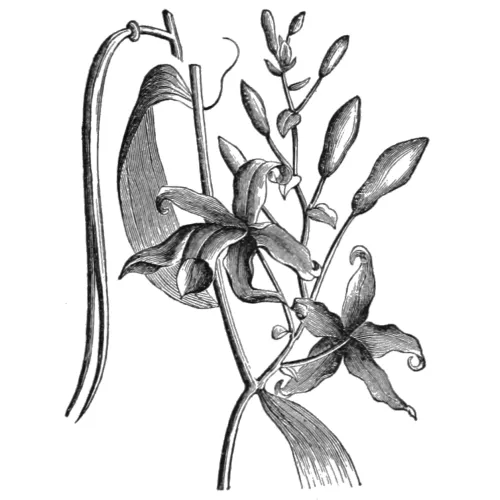
Vanilla (Vanilla planifolia) is the world's most beloved flavor and one of its most complex aromatic botanicals — with a fragrance so universally pleasing that it triggers positive emotional responses across virtually all cultures and demographics. Vanilla's therapeutic properties go far beyond its extraordinary scent: its active compound vanillin is a potent antioxidant, and the full-spectrum extract of vanilla bean contains a remarkable range of skin-supportive and mood-elevating compounds.
Key Benefits of Vanilla
- Vanillin — vanilla's primary phenolic compound — is a potent antioxidant with activity comparable to Vitamin E in free-radical scavenging assays, protecting skin cells from premature aging and oxidative damage. (PubMed reference)
- Research demonstrates that the scent of vanilla triggers immediate neurological calm and positive affect — reducing stress hormones and producing a warm, safe emotional state through its association with nurturing, warmth, and sweetness.
- Contains hydroxybenzaldehyde, eugenol, and ferulic acid alongside vanillin — a phytochemical profile with broad antioxidant, anti-inflammatory, and skin-conditioning activity.
- A powerful aromatic aphrodisiac in traditional use — vanilla's warm, sweet scent has been associated with sensuality, comfort, and emotional intimacy across cultures for centuries.
- Its natural emollient compounds help condition and soften skin, contributing a genuine moisturizing dimension alongside its aromatic appeal.
- One of the most effective masking agents in natural formulation — vanilla's sweet warmth harmonizes and softens sharper, more medicinal botanical aromas in complex blends.
- Carries profound emotional memory associations — the warm, sweet, nurturing character of vanilla connects products to feelings of safety, comfort, and pleasure that no other aromatic can replicate.
Vanilla is the botanical of unconditional comfort — it asks nothing, offers everything, and makes every product feel instantly welcoming. Its antioxidant properties are real and meaningful, but its true gift is the way it makes the entire sensory experience of natural body care feel like coming home.
Traditional Chinese Medicine (TCM) Perspective
Vanilla (Xiāng Cǎo Lán, 香草兰) is not in the classical Chinese pharmacopoeia, but its sensory and chemical properties are fully interpretable through TCM's framework. Its warm, sweet, deeply comforting aromatic nature places it among substances that nourish the Spleen, warm the middle Jiao, and calm the Heart Spirit.
- TCM Classification (functional): Warming aromatic that nourishes the Spleen, calms the Heart Spirit
- Nature & Flavor (functional): Warm; Sweet
- Meridians Entered (functional): Spleen, Stomach, Heart
- Key TCM Actions: Warms and tonifies the middle Jiao, generates fluids and nourishes Yin, calms the Heart Spirit through its deeply reassuring aromatic action, reduces anxiety rooted in Spleen Qi deficiency.
The TCM five-emotion framework associates the Spleen with pensiveness and worry (思, sī) — excessive mental activity, overthinking, and anxiety that depletes Spleen Qi. Vanilla's warm, sweet, "comfort food" aromatic profile directly addresses this pattern: it signals safety, nourishment, and warmth to the nervous system in exactly the way that sweet, warming Spleen foods (like rice congee or baked root vegetables) do in TCM dietary therapy. Its vanillin content mimics breast milk aroma — one of the most fundamentally nourishing sensory signals available to human neurobiology.
Manzano & Williamson (2010) documented vanillin's anxiolytic effects in validated animal models. Pichette et al. established the antioxidant activity of vanilla extract at ~100 mg vanillin equivalent per serving. The human evidence base is strongest for the olfactory-neurological pathway — vanilla aroma has been shown by Hayne et al. to reduce anxiety-related behaviour via GABA and serotonin modulation. Pure vanilla extract (not synthetic vanillin) contains the full phenolic co-compound matrix. Warm delivery amplifies the aromatic component and enhances CNS uptake.
Warm Vanilla Calming Milk
- 1 tsp pure vanilla extract (or scraped seeds of ½ vanilla bean) in 250 ml warm oat or dairy milk.
- 1 tsp honey + pinch of nutmeg (¼ tsp max).
- Warm milk to just below simmering. Remove from heat, then add vanilla — this preserves the aromatic phenolic content better than adding during heating.
- Drink 30–45 minutes before bed or during an anxious period.
Research note: Use only pure vanilla extract or whole vanilla bean — imitation vanilla is 100 % synthetic vanillin dissolved in water/alcohol, lacking the minor phenolic compounds (p-hydroxybenzaldehyde, ferulic acid, etc.) that appear to contribute synergistically to the observed biological effects. Full-fat milk enhances both the aromatic delivery (fat carries aromatic compounds) and the satiety/calming response.
Before you use this: Pure vanilla extract contains approximately 35 % alcohol by volume — those strictly avoiding alcohol should use scraped vanilla bean seeds or an alcohol-free vanilla extract instead. Rare vanilla allergy exists, most commonly as a cross-reaction in those sensitive to balsam of Peru (a perfume ingredient); if you react to fragranced cosmetics or certain adhesives, consider a small test amount first. Imitation vanilla (synthetic vanillin) may trigger reactions in individuals sensitive to artificial additives and does not provide the same full-spectrum phenolic benefits as pure extract. The information on this page is for educational purposes only and does not constitute medical advice. Every person's health is unique — before incorporating any herb or botanical into your routine, especially if you are pregnant, nursing, managing a health condition, or taking prescription medications, please consult a qualified integrative health professional.


