
Main page content
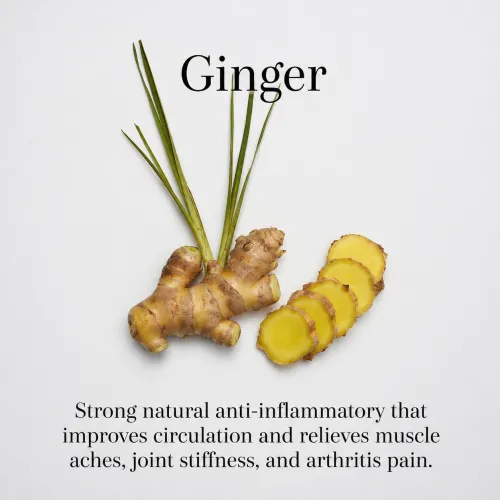
Ginger (Zingiber officinale) is one of the most important medicinal plants in the world — in continuous use for over 5,000 years across Ayurvedic, Traditional Chinese, Arabic, and European medical traditions. Its rhizome contains an extraordinary array of bioactive compounds, led by gingerols and shogaols, that deliver broad anti-inflammatory, analgesic, digestive, and circulatory benefits. Modern research has validated virtually every traditional application, making ginger one of the most evidence-rich botanicals in existence.
Key Benefits of Ginger
- Gingerols and shogaols — the primary bioactive compounds — are potent inhibitors of COX-2 and 5-LOX inflammatory enzymes, delivering an anti-inflammatory mechanism comparable to NSAIDs but through a gentler, multitarget pathway. (PubMed reference)
- Clinically demonstrated to reduce osteoarthritis knee pain in multiple double-blind trials — with effect sizes comparable to ibuprofen in some studies.
- Powerfully warming and circulatory topically — increases local blood flow, warms stiff muscles, and helps clear metabolic waste from overworked tissue.
- Activates TRPV1 receptors (the same receptors targeted by capsaicin) — producing a warm, invigorating sensation that signals active analgesic compounds at work.
- Rich in zingerone and paradol — additional anti-inflammatory and antioxidant compounds that broaden ginger's therapeutic spectrum.
- Traditionally central to Ayurvedic "shunthi" (dried ginger) preparations for joint pain, arthritis, and warming Kapha-type conditions.
- Works synergistically with turmeric, frankincense, and black pepper in compound formulations — each amplifying the others' anti-inflammatory mechanisms.
Ginger is one of the most complete anti-inflammatory botanicals known — warming, circulatory, analgesic, and backed by a research record that bridges 5,000 years of clinical tradition with modern molecular pharmacology. It is simply indispensable in any serious natural pain or recovery formula.
Traditional Chinese Medicine (TCM) Perspective
Ginger is one of the most important herbs in all of Traditional Chinese Medicine, with continuous use documented for over 2,500 years. It appears in the Shén Nóng Běn Cǎo Jīng and remains a cornerstone of the modern TCM pharmacopoeia in both fresh (Shēng Jiāng, 生姜) and dried (Gān Jiāng, 干姜) forms, each with distinct actions.
- Chinese Name: Sheng Jiang (生姜) — Fresh Ginger; Gan Jiang (干姜) — Dried Ginger
- Nature & Flavor: Warm (fresh) / Hot (dried); Pungent
- Meridians Entered: Lung, Spleen, Stomach (fresh); Spleen, Stomach, Heart, Lung (dried)
- Key TCM Actions (Sheng Jiang): Releases the Exterior and disperses Wind-Cold, warms the middle Jiao, stops vomiting (the "vomiting saint"), transforms Phlegm, detoxifies. (Gan Jiang): Warms the middle Jiao and expels interior Cold, rescues devastated Yang, warms the Lung and transforms Phlegm-Cold.
Sheng Jiang is considered so fundamental to TCM that it appears as a harmonizing ingredient in more classical formulas than almost any other herb. It warms the Spleen's transforming function, moderates the harsh properties of toxic herbs, and is the quintessential domestic remedy for colds, nausea, and cold-pattern digestive disorders. Topically, its gingerols and shogaols deliver the classic "open the channels, warm the Bi" action central to Chinese liniment therapy.
Black et al. (2010) RCT: 2 g/day raw or heated ginger reduced post-exercise muscle pain by 25 % over 11 days. Bartels et al. (2015) meta-analysis confirmed OA pain reduction comparable to low-dose ibuprofen at 255 mg standardised extract (equivalent to ~2 g fresh root). The critical preparation detail: gingerols degrade above 70 °C, converting to shogaols — both are potent anti-inflammatories but through different mechanisms. Do not boil ginger.
Anti-Inflammatory Ginger Shot
- 30–40 g fresh ginger root (a thumb-sized piece, ~2 tbsp grated) — providing approximately 2 g active gingerols.
- Juice of 1 lemon + 1 tsp raw honey + a pinch of turmeric + ¼ tsp black pepper.
- Press through a juicer or blend and strain. Take as a 50–60 ml concentrated shot.
- Or steep 1 tsp grated fresh ginger in 250 ml water at 65–70 °C (hot but not boiling) for 7 minutes, covered.
Research note: Water just off the boil (90–95 °C) sitting for 2–3 minutes before pouring over ginger approximates 70–75 °C by the time it contacts the herb — a practical method for preserving gingerol content. Fresh and dried ginger have different but complementary active profiles; fresh is superior for nausea, dried for deeper anti-inflammatory and circulatory applications.
Before you use this: At the 2 g/day therapeutic dose, ginger has a clinically meaningful anticoagulant effect — do not combine with warfarin, aspirin, clopidogrel, or other blood-thinning medications without medical supervision. Ginger may mildly lower blood glucose; those on insulin or oral hypoglycaemics should monitor when beginning regular therapeutic use. Large doses can trigger or worsen acid reflux and heartburn in sensitive individuals. Culinary amounts of ginger during pregnancy are considered safe; high supplemental doses should be discussed with a healthcare provider. The information on this page is for educational purposes only and does not constitute medical advice. Every person's health is unique — before incorporating any herb or botanical into your routine, especially if you are pregnant, nursing, managing a health condition, or taking prescription medications, please consult a qualified integrative health professional.


