
Main page content
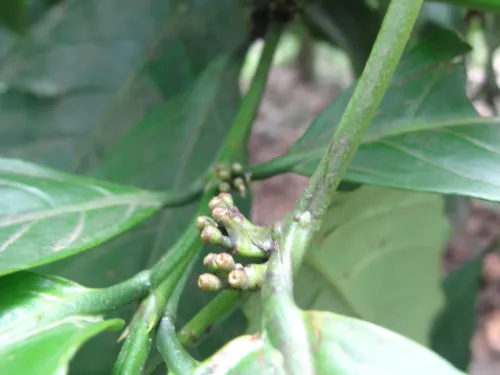
Clove leaf essential oil is distilled from the large, dark green leaves of the Syzygium aromaticum tree — a byproduct of the same tropical tree that produces the prized clove bud. While leaf oil shares clove's signature eugenol-rich composition, its profile is slightly different: higher in eugenol, slightly more phenolic and sharper in character, and used primarily in applications where potent antimicrobial and analgesic action is the priority.
Key Benefits of Clove Leaf
- Very high eugenol content (often 82–88%) — delivering intense antimicrobial, analgesic, and anti-inflammatory activity typical of clove family oils. (PubMed reference)
- Excellent broad-spectrum antimicrobial agent — effective against bacteria (including antibiotic-resistant strains), fungi, and many pathogens in topical applications.
- Provides reliable topical pain relief — eugenol's local anesthetic action makes clove leaf oil a workhorse in natural pain formulations and warming rubs.
- Stronger, more economical option compared to bud oil — used in professional and therapeutic-grade formulations where higher potency is required.
- Its sharp, medicinal-spicy aroma is unmistakably clove — warming, invigorating, and evocative of traditional apothecary preparations.
- Contains terpene compounds alongside eugenol that contribute to its antioxidant action and overall therapeutic breadth.
- Used across Ayurvedic and Unani traditional medicine systems as a warming herb for pain, cold, and infectious conditions.
Clove leaf oil is the working herbalist's workhorse — less refined than bud oil, but equally potent and honest in its action. Its high eugenol content and broad therapeutic range make it an invaluable tool in serious natural formulation.
Traditional Chinese Medicine (TCM) Perspective
Clove leaf shares the core warming, aromatic nature of the bud but offers a slightly different aromatic and chemical profile. In TCM, all parts of the clove tree are considered warming and pungent, with applications ranging from topical pain relief to aromatic fumigation.
- Chinese Name: Related to Ding Xiang (丁香) — Clove tree
- Nature & Flavor (functional): Warm; Pungent
- Meridians Entered (functional): Spleen, Stomach, Lung
- Key TCM Actions: Warms the middle Jiao, disperses Cold-Damp, opens the channels, antimicrobial (resolves toxins), aromatic awakening of the sensory orifices.
In Chinese external medicine, the leaves of aromatic plants are frequently used in fumigation therapies (薰法, xūn fǎ) — the practice of burning or steaming fragrant herbs to clear pathogenic Qi from the skin, joints, and immediate environment. Clove leaf's antimicrobial aroma was used historically in Chinese medicine to purify sickrooms and prevent contagion, reflecting TCM's understanding of aromatic herbs as "resolving toxins through fragrance."
Topical eugenol concentrations of 0.5–1% in a carrier oil are well-supported for analgesic and antimicrobial action in external preparations. Kim et al. (2009) confirmed eugenol's local anesthetic effect via TRPV1 channel inhibition at low concentrations, while Chaieb et al. (2007) demonstrated broad-spectrum antimicrobial efficacy of clove essential oil at sub-1% dilution in topical media. Clove leaf oil, with its 82–88% eugenol content, is active at these conservative dilutions — meaning a little goes a very long way.
Clove Leaf Warming Pain-Relief Rub
- Measure 30 ml of a carrier oil (coconut, jojoba, or sweet almond) into a small glass bottle or mixing bowl.
- Add 9–15 drops of clove leaf essential oil (approximately 0.75–1% dilution) — do not exceed this ratio for regular topical use.
- Optionally add 6 drops of peppermint or camphor essential oil to broaden the warming-cooling analgesic effect and temper clove leaf's sharp phenolic character.
- Blend thoroughly and apply a small amount to the affected joint, muscle, or area of tension — massage gently until absorbed. Avoid broken or sensitive skin.
- Store in a dark glass bottle away from heat. Use within 6 months.
Research note: Clove leaf oil is significantly more dermally aggressive than bud oil at equivalent concentrations — always patch-test before first use and never apply undiluted to skin. Avoid mucous membranes, eyes, and any area that will be covered with non-breathable dressing immediately after application. The warming sensation is normal; redness or burning beyond mild warmth indicates the dilution must be reduced further.
Before you use this: Clove leaf essential oil is among the most potent dermally active essential oils available — its very high eugenol content (82–88%) makes undiluted or inadequately diluted application a significant skin irritation and sensitisation risk; always dilute to 0.5–1% in a suitable carrier oil and perform a patch test 24 hours before use. Avoid use during pregnancy and breastfeeding, and keep away from children and infants — eugenol is a known mucous membrane irritant and systemic exposure at elevated doses carries hepatotoxic risk. Clove leaf oil may potentiate the effects of anticoagulant medications (including warfarin and aspirin) due to eugenol's platelet-inhibiting properties; consult your physician before use if you are on blood-thinning therapy. The information on this page is for educational purposes only and does not constitute medical advice. Every person's health is unique — before incorporating any herb or botanical into your routine, especially if you are pregnant, nursing, managing a health condition, or taking prescription medications, please consult a qualified integrative health professional.


