
Main page content
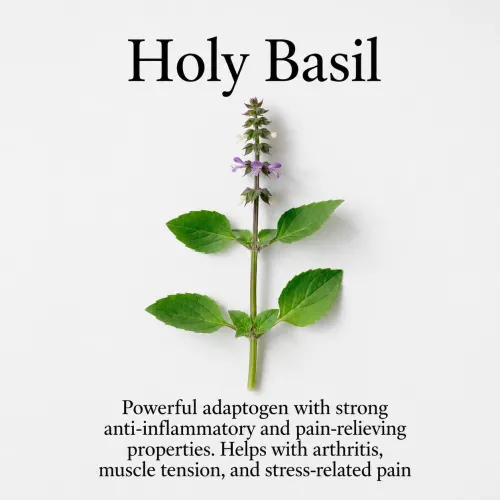
Holy basil, or Tulsi (Ocimum tenuiflorum), is one of the most sacred medicinal plants in Ayurvedic tradition — honored in Hindu culture as a divine protector and used in medicine for over 3,000 years. Modern research has confirmed that Tulsi is a true adaptogen: a plant that helps the body adapt to physical, chemical, and psychological stress across multiple physiological systems simultaneously. It is one of the most comprehensively studied adaptogens in the botanical pharmacopeia.
Key Benefits of Holy Basil
- Clinically demonstrated adaptogenic and anti-stress activity — multiple controlled trials show significant reductions in cortisol, anxiety, cognitive load, and stress-related symptoms with regular use. (PubMed reference)
- Contains eugenol, ursolic acid, and rosmarinic acid — an exceptional trio of anti-inflammatory, antioxidant, and antimicrobial compounds.
- Potent antibacterial and antifungal properties — studies confirm activity against a broad range of pathogens, including antibiotic-resistant strains.
- Demonstrates antioxidant activity comparable to many well-known antioxidant supplements — protecting cells from oxidative stress across multiple pathways.
- Traditionally used topically in Ayurvedic skin preparations for its ability to clear blemishes, calm inflammation, and support the body's natural detoxification processes.
- Its fresh, green, spicy-sweet fragrance is both grounding and uplifting — used in aromatherapy to reduce mental fatigue, sharpen focus, and support emotional resilience.
- Revered in India as Vishnu's plant — a living embodiment of divine protection and health — connecting its use in modern body care to millennia of reverent, purposeful relationship with this remarkable plant.
Holy basil is one of nature's most complete plant medicines — simultaneously antistress, anti-inflammatory, antimicrobial, and antioxidant. Its role in modern formulations honors a 3,000-year tradition of Tulsi as a cornerstone of vibrant, resilient health.
Traditional Chinese Medicine (TCM) Perspective
Holy Basil (Luó Lè, 罗勒) is recognized in modern Chinese herbal medicine for its aromatic, Qi-moving, and surface-releasing properties. It bridges Ayurvedic and Chinese traditions as an adaptogenic, stress-regulating herb with affinity for both the Lung and the Liver.
- Chinese Name: Luo Le (罗勒) — Basil (Holy Basil variety)
- Nature & Flavor: Warm; Pungent, slightly Sweet
- Meridians Entered: Lung, Spleen, Liver
- Key TCM Actions: Disperses Wind-Cold from the Exterior, moves Qi and relieves pain, transforms Damp and harmonizes the middle Jiao, regulates Liver Qi, calms the Spirit.
Holy Basil's adaptogenic action — reducing cortisol and calming the HPA axis response — corresponds in TCM to simultaneously soothing Liver Qi stagnation and calming Heart Shen agitation: the two-organ pattern underlying stress-driven anxiety and emotional reactivity. Its camphor-rich essential oil opens the Lung and disperses exterior pathogens, while its eugenol component delivers anti-inflammatory and analgesic benefit through the classical TCM mechanism of "moving Qi and Blood in the channels."
Madhu et al. (2012) RCT: 1 000 mg/day Ocimum sanctum extract over 8 weeks significantly reduced fasting glucose, postprandial glucose, and HbA1c in type 2 diabetes patients. Bhattacharyya et al. (2008): 500 mg/day tulsi extract reduced cortisol and anxiety markers measurably. Two strong cups of tulsi tea brewed from 2 g dried leaf each delivers approximately 600–800 mg of the full-spectrum dry herb equivalent.
Traditional Tulsi (Holy Basil) Tea
- 2 g dried holy basil leaves (~1 heaped tsp) per cup of freshly boiled water.
- Steep 5–7 minutes, covered, to retain the volatile eugenol and ursolic acid content.
- Add ¼ tsp fresh ginger + 1 tsp raw honey.
- Drink 2 cups/day, 30 minutes before or after meals, for consistent adaptogenic effect.
Research note: Effects are adaptogenic and accumulate over 4–8 weeks; do not judge benefit before this window. Tulsi mildly reduces blood glucose — diabetics on medication should monitor blood sugar when beginning daily use. Three varieties of holy basil are used medicinally (Vana, Rama, and Krishna tulsi); Rama tulsi has the highest ursolic acid content and the strongest anti-inflammatory evidence.
Before you use this: Holy basil meaningfully lowers blood glucose — those on metformin, sulfonylureas, insulin, or other glucose-lowering medications must monitor blood sugar carefully when beginning regular daily use. Emerging animal evidence suggests potential effects on fertility (reduced sperm count); those trying to conceive should discuss use with their reproductive health provider. Avoid at therapeutic supplemental doses during pregnancy. May interact mildly with blood-thinning medications. The information on this page is for educational purposes only and does not constitute medical advice. Every person's health is unique — before incorporating any herb or botanical into your routine, especially if you are pregnant, nursing, managing a health condition, or taking prescription medications, please consult a qualified integrative health professional.


