
Main page content
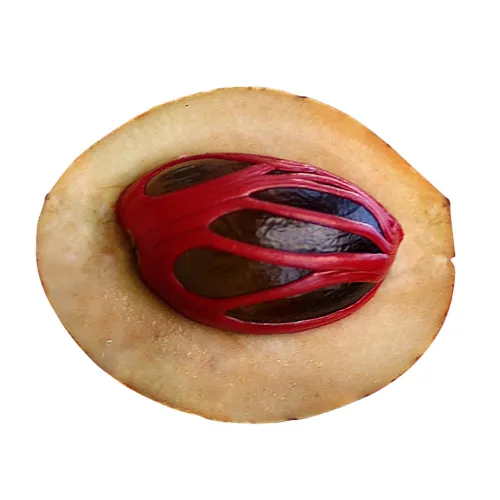
Nutmeg (Myristica fragrans) is one of the most intriguing and multifaceted spices in the world — originating from the Banda Islands of Indonesia, it was once among the most valuable commodities on Earth, traded at extraordinary cost across ancient and medieval spice routes. Its essential oil and oleoresin contain a complex array of bioactive compounds — myristicin, elemicin, safrole, and eugenol — that deliver warming, analgesic, and antimicrobial benefits with a rich, warming aromatic character unlike any other spice.
Key Benefits of Nutmeg
- Contains myristicin and elemicin — unique aromatic compounds with documented anti-inflammatory and analgesic properties, as well as mild warming effects on the skin's surface circulation. (PubMed reference)
- Rich in eugenol and isoeugenol — analgesic compounds shared with clove that contribute to nutmeg's pain-relieving properties in topical application.
- Traditionally used in Ayurvedic and Unani medicine as a warming herb for joint pain, arthritis, and cold-type muscular conditions — applied externally as an infused oil for rheumatic complaints.
- Creates a gentle, sustained warming sensation on the skin — stimulating local circulation and creating the comforting heat associated with deep muscle relief.
- Demonstrates natural antimicrobial activity against bacteria and fungi — contributing to the overall skin-protective properties of compound formulations.
- Its warm, woody, spicy-sweet fragrance is deeply comforting — used in aromatherapy for mental fatigue, anxiety, and the desire for warmth and security.
- A classic ingredient in winter warming formulas — paired with clove, cinnamon, and ginger in traditional heating preparations for cold weather and seasonal joint stiffness.
Nutmeg is the spice of warmth, depth, and winter comfort — bringing both a satisfying heat and a rich, complex aroma to therapeutic body care formulations. Used with proper respect for its potency, it is a beautiful and effective addition to warming muscle and joint preparations.
Traditional Chinese Medicine (TCM) Perspective
Ròu Dòu Kòu (肉豆蔻) — Nutmeg — is a classical TCM herb that warms and astringes the middle Jiao, making it especially valuable for chronic Cold-pattern digestive disorders with diarrhea. It appears in the classical formula Sì Shén Wán (Four Miraculous Herbs Pill) for dawn diarrhea.
- Chinese Name: Rou Dou Kou (肉豆蔻) — Nutmeg
- Nature & Flavor: Warm; Pungent
- Meridians Entered: Spleen, Stomach, Large Intestine
- Key TCM Actions: Warms the middle Jiao, moves Qi and relieves pain, astringes the intestines and stops diarrhea, descends rebellious Qi, improves appetite and digestion.
Rou Dou Kou is a relatively rare herb that combines warming, moving (Qi-activating), AND astringing actions simultaneously — most herbs either move (dispersing) or astringe (gathering), not both. This is because in chronic Cold-pattern diarrhea, the Spleen Yang is too deficient to both warm AND hold — requiring both supplementation and astringency in the same herb. Its aromatic warmth topically corresponds to "warming the Spleen channel and dispelling Cold accumulation from the abdominal region."
Safety first: nutmeg contains myristicin, which is toxic above 5–10 g (roughly 2 whole nutmegs). Never exceed ¼ tsp (~1 g) per serving. Narayanan et al. (2012) documented sleep-onset improvement and mild anxiolytic effect at low doses (equivalent to ~50–100 mg nutmeg extract in animal models). Traditional Ayurvedic use: Jatiphala milk at ¼ tsp in warm milk for insomnia is a well-established preparation across both Ayurvedic and European herbalism traditions.
Warm Nutmeg Night Milk
- ¼ tsp freshly grated nutmeg (~1 g) — freshly grated only; pre-ground nutmeg has significantly lower myristicin and eugenol content due to volatile evaporation.
- 250 ml warm oat or dairy milk (warmed gently, not boiled).
- 1 tsp honey + a pinch of Ceylon cinnamon.
- Add nutmeg after removing milk from heat. Drink 30–45 minutes before bed.
Research note: ¼ tsp is the maximum recommended culinary dose. Do not attempt to exceed it for a stronger effect — the therapeutic window for nutmeg is narrow and myristicin's psychoactive and toxic effects begin at doses not far above the therapeutic range. Avoid entirely during pregnancy (can stimulate uterine contractions at higher doses). Use freshly grated whole nutmeg — a whole nutmeg lasts years; once ground, it loses potency within weeks.
Before you use this: This ingredient has a narrow safety window. Nutmeg contains myristicin, which is toxic above 5–10 g (approximately 2 whole nutmegs). Symptoms of toxicity begin at 1–3 g in sensitive individuals and include nausea, vomiting, severe dizziness, and in serious cases hallucinations, tachycardia, and seizures. The therapeutic dose in this recipe (¼ tsp / ~1 g) must not be exceeded. Do not give to children. Avoid entirely during pregnancy — myristicin has documented stimulant effects on uterine smooth muscle. Do not attempt to increase the dose for a stronger effect; the therapeutic window is very narrow. The information on this page is for educational purposes only and does not constitute medical advice. Every person's health is unique — before incorporating any herb or botanical into your routine, especially if you are pregnant, nursing, managing a health condition, or taking prescription medications, please consult a qualified integrative health professional.


