
Main page content
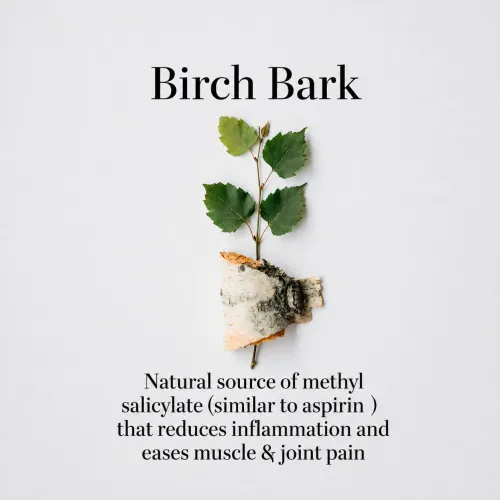
Birch (Betula pendula) is one of the most important medicinal trees in Northern European folk healing traditions, revered by Scandinavian, Finnish, and Slavic healers for its remarkable detoxifying, anti-inflammatory, and skin-renewing properties. Both the leaf and bark contain a rich array of active compounds — betulin, betulinic acid, flavonoids, and saponins — that make birch one of the most versatile and effective botanicals for skin and body care.
Key Benefits of Birch Leaf and Bark
- Rich in betulin and betulinic acid — triterpene compounds found almost exclusively in birch bark that demonstrate significant anti-inflammatory, antiviral, and skin-regenerating activity in research. (PubMed reference)
- Powerful lymphatic and circulatory stimulant — traditionally used to encourage drainage, reduce puffiness, and support the body's natural detoxification processes.
- Contains methyl salicylate (related to aspirin), which provides warming, analgesic relief for muscle aches and joint stiffness.
- Birch leaf has natural diuretic properties — traditionally used in Nordic sauna culture to support kidney function and reduce fluid retention.
- Naturally astringent — helps tighten and tone skin, minimize the appearance of pores, and control excess oil.
- Supports scalp health and is traditionally used in hair rinses to reduce dandruff and promote healthy hair growth.
- The classic fragrance of birch — clean, woody, and slightly medicinal — is deeply associated with the Nordic sauna tradition and the feeling of forest-fresh renewal.
Birch is the tree of renewal — the first to leaf out in spring, associated with new beginnings and purification across Northern European cultures. Its properties in natural body care reflect this — energizing, clarifying, and deeply restorative.
Traditional Chinese Medicine (TCM) Perspective
Birch (Huà Mù, 桦木) occupies the functional category of herbs in TCM that clear Heat, resolve toxins, drain Damp, and reduce swelling. Its bark and leaf share properties with classical herbs used to treat Damp-Heat skin conditions and inflammatory swellings.
- Chinese Name: Huà Mù Pí (桦木皮) — Birch Bark
- Nature & Flavor (functional): Cool; Bitter
- Meridians Entered (functional): Lung, Bladder, Liver
- Key TCM Actions: Clears Heat, resolves toxicity, dries Damp, reduces swelling and inflammation, promotes diuresis, benefits skin conditions.
In TCM's dermatological tradition, bitter and cooling herbs like birch bark are used to address the Damp-Heat patterns underlying conditions such as eczema, psoriasis, and inflammatory skin eruptions. The betulinic acid and anti-inflammatory compounds in birch correspond directly to the TCM principle of "clearing Fire toxins from the skin" (清皮肤火毒).
European clinical guidelines (Commission E monograph) recognise 2–3 g dried birch leaf per cup, 3 cups/day as the effective dose for promoting urinary tract flushing and reducing inflammatory oedema. Keinänen et al. confirmed anti-inflammatory activity via betulin and lupeol at this dose.
Birch Leaf Flushing Tea
- 2 g dried birch leaf (approximately 1 heaped tsp) per 250 ml freshly boiled water.
- Steep 10–15 minutes, covered.
- Drink 3 cups spread across the day, always alongside at least 2 L total water.
Research note: Birch has a mild diuretic action — its anti-inflammatory benefit in the urinary tract and for oedematous conditions depends on adequate fluid intake. It is contraindicated in cardiac or renal oedema requiring medical management. Effective dose window is 2–3 g dried leaf per serving; bark preparations require a cold-start decoction (simmer 15 min) for adequate betulinic acid extraction.
Before you use this: Birch has a meaningful diuretic effect — it is contraindicated in cardiac or renal oedema where fluid management is medically controlled. Always drink at least 2 L of water per day alongside the tea. Those with kidney disease or compromised renal function should not use birch without medical supervision. Birch pollen allergy cross-reactivity with the leaf is possible; discontinue if any allergic reaction occurs. The information on this page is for educational purposes only and does not constitute medical advice. Every person's health is unique — before incorporating any herb or botanical into your routine, especially if you are pregnant, nursing, managing a health condition, or taking prescription medications, please consult a qualified integrative health professional.


