
Main page content
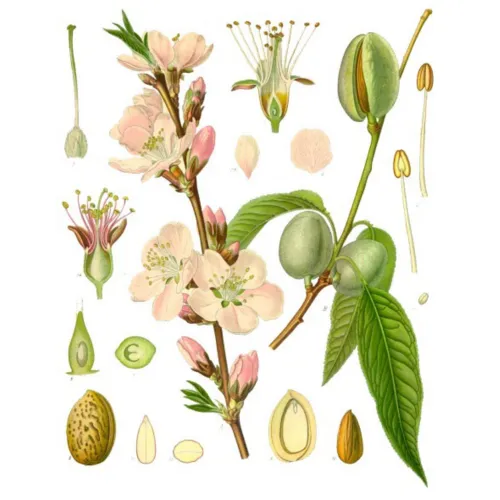
The almond (Prunus dulcis) has been prized since antiquity across Mediterranean and Middle Eastern cultures for its rich, nourishing properties. Cold-pressed almond oil is one of the most versatile and beloved carrier oils in natural skincare — lightweight enough to absorb quickly yet deeply conditioning for even the most sensitive skin.
Key Benefits of Almond
- Exceptionally rich in Vitamin E (tocopherols), a fat-soluble antioxidant that protects cells from oxidative stress and supports healthy skin aging.
- High in oleic and linoleic fatty acids that closely mirror the skin's natural lipid barrier, helping restore softness and suppleness.
- A renowned emollient — smooths and softens dry, rough, or flaky skin without leaving a greasy residue.
- Traditionally used to soothe inflammation and calm irritated, sensitive, or reactive skin conditions.
- Supports skin elasticity and helps maintain the appearance of a toned, youthful complexion over time.
- Gentle enough for all skin types, including babies and those prone to eczema or dermatitis.
- An excellent massage carrier oil — its slip and absorbency make it ideal for muscle work and whole-body application.
Almond oil has been featured in numerous studies for its skin-barrier supporting and anti-inflammatory properties. It is a cornerstone ingredient in natural balms, salves, and body oils wherever deep, lasting hydration is the goal.
Traditional Chinese Medicine (TCM) Perspective
In Traditional Chinese Medicine sweet almonds correspond to Xing Ren (杏仁) — though the classical pharmacopoeia emphasizes the bitter variety for descending Lung Qi, sweet almonds share the same organ affinities and are prized as a gentler, nourishing form of the same kernel.
- Chinese Name: Xing Ren (杏仁) — Sweet Almond Kernel
- Nature & Flavor: Neutral; Sweet
- Meridians Entered: Lung, Large Intestine
- Key TCM Actions: Moistens the Lung, lubricates the Large Intestine, nourishes Yin and Body Fluids, softens and conditions the skin (applied topically).
TCM considers sweet almond an ideal tonic for Lung Dryness — the condition that produces dry cough, parched throat, and dry, flaking skin. Applied externally, its fatty richness replenishes depleted surface Yin and restores the skin's natural luster, making it one of the oldest beauty substances in the classical Chinese materia medica.
Clinical trials confirm benefit at 28–42 g/day (roughly 23–35 almonds). Berryman et al. (2011) showed 42 g/day for three weeks cut post-meal blood-sugar spikes significantly; Hollis & Mattes (2007) demonstrated waist-circumference reduction at 28 g/day over ten weeks. Soaking overnight reduces phytic acid by up to 25 % and activates lipase, improving fat absorption (Hotz & Gibson, 2007).
Activated Almond Morning Tonic
- Soak 28–30 g raw almonds (23 almonds) in 250 ml water overnight at room temperature.
- Drain and rinse. Eat on an empty stomach or blend with 250 ml fresh water and a pinch of turmeric + black pepper for a morning almond milk.
- Drink the blended version cold — heating above 70 °C oxidises the Vitamin E content.
Research note: The skin contains most of the polyphenols; blanched or sliced almonds are nutritionally inferior. Avoid roasted-and-salted varieties — dry-roasting oxidises the monounsaturated fats that provide the cardiovascular benefit.
Before you use this: Tree-nut allergy is among the most common severe food allergies — anyone with a known nut allergy must avoid almonds entirely. Bitter almonds (distinct from sweet) contain cyanogenic glycosides and are toxic; only sweet almonds are used here. At 28–42 g/day, almond intake adds 160–240 calories — account for this if managing weight or blood lipids. At therapeutic doses, almonds may mildly lower blood glucose; those on diabetes medications should monitor accordingly. The information on this page is for educational purposes only and does not constitute medical advice. Every person's health is unique — before incorporating any herb or botanical into your routine, especially if you are pregnant, nursing, managing a health condition, or taking prescription medications, please consult a qualified integrative health professional.


