
Main page content
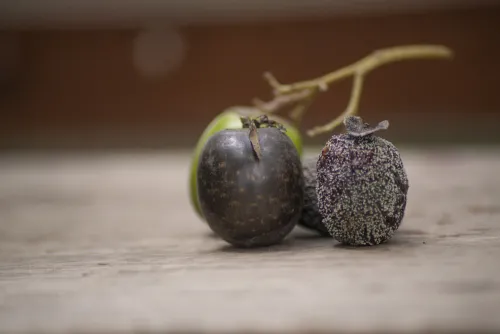
Berries — including blueberries, strawberries, raspberries, and elderberries — represent one of nature's most concentrated sources of antioxidants and skin-protective compounds. Berry extracts have surged in prominence in natural skincare because they deliver real, measurable benefits: protecting against premature aging, brightening, and supporting healthy inflammation response — all within the safety of whole-plant nutrition.
Key Benefits of Berries
- Exceptionally high in anthocyanins — deeply pigmented flavonoids with potent antioxidant activity that neutralize free radicals and help defend skin from UV and environmental damage.
- Rich in Vitamin C, which supports collagen synthesis, helps fade hyperpigmentation, and maintains a bright, even skin tone.
- Contain ellagic acid and resveratrol — polyphenols studied for their ability to inhibit enzymes that break down collagen and elastin, supporting firmer-looking skin.
- Provide gentle natural exfoliation through fruit-derived AHAs, smoothing skin texture and encouraging cell renewal.
- Naturally anti-inflammatory — berry polyphenols help calm redness, reactive skin, and the appearance of skin irritation.
- High antioxidant capacity (ORAC score) — berries consistently rank among the highest-ORAC foods, and these same compounds are active when applied topically.
- Add a beautiful, lush natural color and fragrance to formulations — connecting the product to the abundance of the natural world.
Berries are nature's anti-aging toolkit in concentrated form. Whether used as individual extracts or as a multi-berry blend, they bring vibrant, measurable protection and nourishment to any skin or body care formulation.
Traditional Chinese Medicine (TCM) Perspective
Berries as a category correspond to a broad group of TCM herbs that nourish Liver and Kidney Yin, enrich Blood, and tonify the fundamental essence (Jing). Deep red and purple berries in particular are seen as nourishing to the Blood and the Heart.
- TCM Classification: Yin and Blood tonics; Liver and Kidney nourishing fruits
- Nature & Flavor (functional): Neutral to slightly warm; Sweet, slightly Sour
- Meridians Entered (functional): Liver, Kidney, Heart
- Key TCM Actions: Nourishes Liver and Kidney Yin, enriches Blood, brightens the eyes, tonifies Jing (essence), mildly astringes.
Key berry-type herbs in the classical pharmacopoeia include Gǒu Qǐ Zǐ (枸杞子 — Goji berry), one of the most important tonic herbs in all of Chinese medicine, and Wǔ Wèi Zǐ (五味子 — Schisandra), the "five-flavor berry" that simultaneously nourishes Kidney Yin, calms the Heart, and astringes Lung Qi. Berries in skincare bring this same Yin-nourishing, fluid-generating quality to the surface of the body.
Research consistently shows that a daily intake of 150–200 g of mixed fresh berries (approximately 1–1.5 cups) delivers clinically meaningful antioxidant and anti-inflammatory effects. Basu et al. (2010) demonstrated that 250 g/day of strawberries over eight weeks significantly reduced oxidative stress markers and LDL oxidation. Stull et al. (2010) found that a blueberry smoothie containing 375 g of blueberries improved insulin sensitivity in obese adults. For elderberry specifically, Tiralongo et al. (2016) confirmed that 15 ml of elderberry syrup taken four times daily reduced flu duration by an average of four days.
Daily Mixed-Berry Anti-Inflammatory Tonic
- Combine 80 g blueberries, 60 g raspberries, and 60 g strawberries (fresh or frozen — freezing preserves anthocyanins) in a blender.
- Add 200 ml cold water or unsweetened pomegranate juice, a pinch of ground ginger, and 1 teaspoon of raw honey if desired.
- Blend until smooth and consume in the morning, ideally on an empty stomach or with a light breakfast.
- During cold and flu season, add 15 ml of elderberry syrup to the finished blend for additional immune support.
Research note: Heating berries above 70 °C significantly degrades anthocyanin content — consume raw or minimally processed where immune and antioxidant benefit is the primary goal. Frozen berries are nutritionally equivalent to fresh and are an excellent year-round alternative.
Before you use this: Berries are generally safe for most people when consumed in whole-food amounts, but individuals with salicylate sensitivity or histamine intolerance may experience reactions to strawberries and raspberries in particular. Elderberry preparations should not be consumed raw or from unripe berries, as these contain cyanogenic glycosides — always use properly prepared elderberry syrup or extract. People taking blood-thinning medications such as warfarin should be aware that high-dose berry consumption may potentiate anticoagulant effects, and those managing blood sugar with medication should monitor glucose levels, as berries can have a measurable hypoglycemic effect at therapeutic doses. The information on this page is for educational purposes only and does not constitute medical advice. Every person's health is unique — before incorporating any herb or botanical into your routine, especially if you are pregnant, nursing, managing a health condition, or taking prescription medications, please consult a qualified integrative health professional.


