Main page content
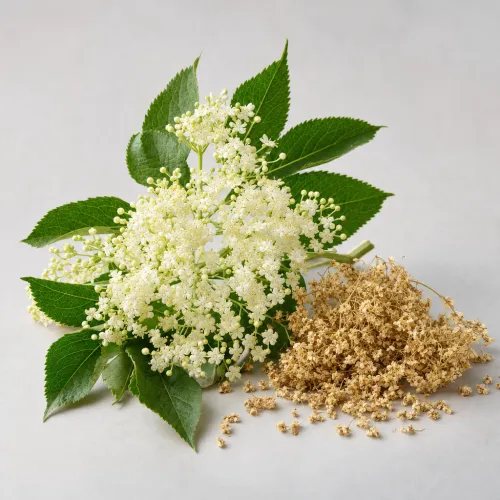
Elder flower comes from the elder tree (Sambucus nigra), whose creamy, honey-scented blossoms open in early summer before the berries. European folk medicine called the elder "the medicine chest of the country people."
Key Benefits of Elder Flower
- A classic diaphoretic — brings on a gentle sweat to help the body through a fever.
- Traditionally used for colds, flu, sinus congestion and hay fever.
- Rich in flavonoids such as quercetin and rutin.
- Used as a skin-softening wash and eye compress.
Elder flower is the gentle half of the elder tree — the flowers open the pores and the berries build defences.
Traditional Chinese Medicine (TCM) Perspective
- Chinese Name: Not a classical Chinese herb (action resembles herbs that release the exterior)
- Nature & Flavor: Cool; Pungent, Bitter
- Meridians Entered: Lung
- Key TCM Actions: Releases the exterior, disperses Wind-Heat, opens the pores.
In TCM terms elder flower is a cool, releasing herb for the first stage of a Wind-Heat cold — fever, sore throat, blocked nose — the same use European herbalists found for it.
- 1 tsp each of elder flower and peppermint in a cup of just-boiled water, 10 minutes. Drink hot, then rest warmly.
Before you use this: Use only elder flowers or properly cooked ripe berries — raw leaves, stems and unripe berries are toxic. Avoid during pregnancy in medicinal amounts. The information on this page is for educational purposes only and does not constitute medical advice. Every person's health is unique — before incorporating any herb or botanical into your routine, especially if you are pregnant, nursing, managing a health condition, or taking prescription medications, please consult a qualified integrative health professional.

Share this with your friends 🙏


