
Main page content
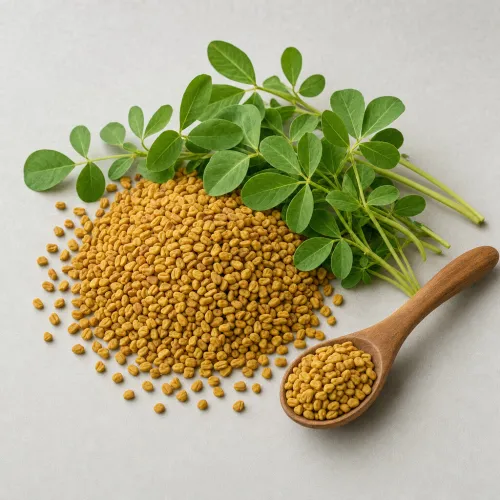
Fenugreek (Trigonella foenum-graecum) is a small clover-like legume whose golden, maple-scented seeds are one of the oldest medicines on record — they were found in Tutankhamun's tomb and are listed in the Ebers Papyrus of 1500 BCE. In India it is methi, a kitchen staple and an Ayurvedic medicine; in China it is hú lú bā; in Greek and Roman medicine it was used for digestion, fevers and nursing mothers. Its seeds are about 50% fibre, most of it a soluble gum called galactomannan, and they carry a rare amino acid, 4-hydroxyisoleucine, that is found almost nowhere else in nature.
Key Benefits of Fenugreek
- 4-hydroxyisoleucine prompts the pancreas to release insulin only when blood sugar is high — so it supports insulin without forcing it. (Sauvaire et al., 1998)
- Galactomannan fibre forms a gel in the gut that slows how fast sugar from a meal reaches the blood, flattening the post-meal spike.
- A meta-analysis of human trials found fenugreek significantly lowered fasting blood glucose, post-meal glucose and HbA1c. (Neelakantan et al., 2014)
- Supports healthy cholesterol and triglyceride levels — the saponins in the seed bind cholesterol in the gut.
- Ayurveda's methi: bitter and warming, reduces Kapha and Vata, kindles agni (digestive fire), and is a classic remedy for prameha.
- A traditional galactagogue across the Middle East and India, used for centuries to support breast-milk supply.
Fenugreek is a kitchen herb that happens to be a serious medicine. Egypt, India, China and Greece each used it for different reasons, and modern research keeps finding the same thing underneath them all: a seed that steadies how the body handles sugar and fat.
Traditional Chinese Medicine (TCM) Perspective
- Chinese Name: Hú Lú Bā (葫芦巴)
- Nature & Flavor: Warm; Bitter
- Meridians Entered: Kidney, Liver
- Key TCM Actions: Warms Kidney Yang, dispels Cold-Damp, stops pain.
In TCM, Hú Lú Bā warms the Kidney — the root of the body's Yang and the organ that governs water and the lower body. It is used where Cold and Damp have settled in: a cold, aching lower abdomen, weak and cold legs, hernia-type pain, and the heaviness of Damp. In a blood-sugar formula its warmth matters as much as its chemistry: Xiāo Kě (消渴, "wasting and thirsting") that has gone on for years drains the Kidney, and a warm Kidney herb protects the root while cooler herbs clear the Heat above.
The most common traditional method in India is still the simplest.
- Soak 1 tsp (about 5 g) fenugreek seeds overnight in a glass of water.
- In the morning, drink the water and chew the softened seeds on an empty stomach.
- Take with meals instead if you prefer: 5–10 g of seed powder stirred into yogurt or water just before eating, which is how the fibre works best against a post-meal sugar spike.
Research note: human trials showing effects on blood sugar have used 5–25 g of seed a day, and several weeks of steady use. As a tincture it is usually blended with other blood-sugar herbs.
Before you use this: Avoid during pregnancy — fenugreek can stimulate the uterus. It may lower blood sugar and adds to the effect of diabetes medications; watch your levels. People allergic to peanuts, chickpeas or other legumes may react to fenugreek. It may increase the effect of blood thinners. Harmless but surprising: it can make sweat and urine smell like maple syrup. The information on this page is for educational purposes only and does not constitute medical advice. Every person's health is unique — before incorporating any herb or botanical into your routine, especially if you are pregnant, nursing, managing a health condition, or taking prescription medications, please consult a qualified integrative health professional.

Share this with your friends 🙏


