
Main page content
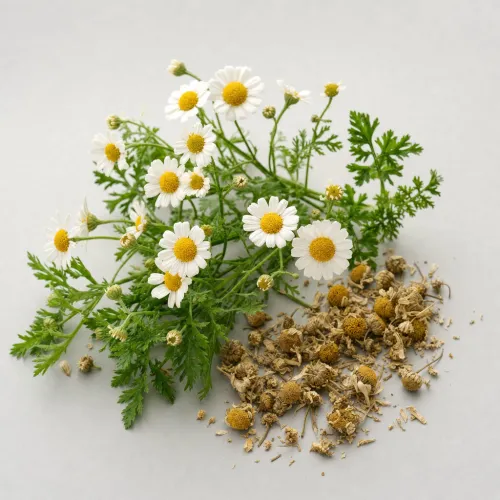
Feverfew (Tanacetum parthenium) is a small daisy-like plant whose name comes from the Latin febrifugia, "fever reducer." English cottage gardens grew it for centuries, and folk healers prescribed a few leaves a day for headaches.
Key Benefits of Feverfew
- Best known for helping prevent migraines when taken daily over time.
- Contains parthenolide, studied for calming inflammation and blood-vessel spasm.
- Traditionally used for fevers, arthritis and menstrual cramps.
- Works best as a steady daily habit rather than in a crisis.
Feverfew is a preventive herb: its gift is fewer bad days, not a quick rescue.
Traditional Chinese Medicine (TCM) Perspective
- Chinese Name: Not a classical Chinese herb (action resembles herbs that calm Liver Wind)
- Nature & Flavor: Cool; Bitter
- Meridians Entered: Liver
- Key TCM Actions: Clears Heat, calms rising Liver Yang and Wind, eases headache.
In TCM terms many migraines are rising Liver Yang or Liver Wind — and feverfew's cool, bitter, calming action fits that pattern.
- ½ tsp dried feverfew in a cup of hot water, 10 minutes, once a day.
Before you use this: Avoid during pregnancy and with blood thinners. Avoid if allergic to the daisy family. Chewing fresh leaves can cause mouth sores. Stopping suddenly after long use can bring back headaches — taper off. The information on this page is for educational purposes only and does not constitute medical advice. Every person's health is unique — before incorporating any herb or botanical into your routine, especially if you are pregnant, nursing, managing a health condition, or taking prescription medications, please consult a qualified integrative health professional.

Share this with your friends 🙏


