
Main page content
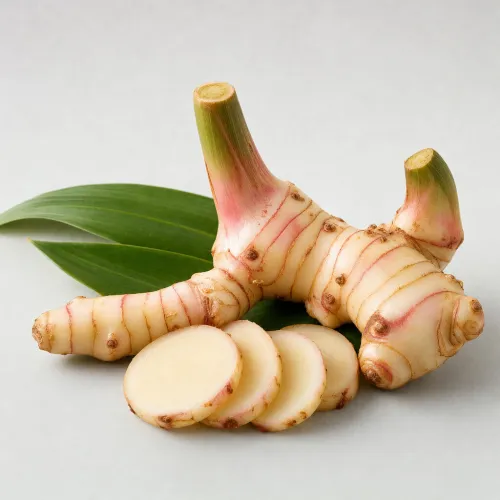
Galangal (Alpinia officinarum, lesser galangal, and its cousin Alpinia galanga) is a rhizome of the ginger family — sharper, more peppery and more piney than ginger, and the backbone of Thai and Indonesian cooking. It reached Europe through the Arab spice trade, and the 12th-century abbess and healer Hildegard of Bingen called it the "spice of life," prescribing it for the heart. In Ayurveda it is kulanjan, in Unani medicine khulanjan, and in TCM gāo liáng jiāng. Its key compound is the flavonoid galangin, alongside warming essential oils that give it its bite.
Key Benefits of Galangal
- Rich in galangin, a flavonoid with antioxidant and anti-inflammatory activity that is studied for its role in protecting cells and supporting healthy metabolism.
- A warming digestive — eases gas, bloating, nausea and cold-type stomach pain, the same way ginger does but more strongly.
- In animal studies, galangal extracts lowered blood sugar and improved how the body handled fats. (Akhtar et al., 2002)
- Antimicrobial — galangal extracts act against a wide range of bacteria and fungi, which is one reason it was so widely used in hot climates.
- Ayurveda's kulanjan: pungent and heating, used for coughs, joint pain and sluggish digestion; it reduces Kapha and Vata.
- Hildegard of Bingen's "heart herb" — European monastic medicine used it for heart pain and weakness.
Galangal is the fire in a formula. On its own it warms the belly and moves digestion; next to colder herbs it keeps them from chilling the stomach, and it helps the whole blend get absorbed and put to work.
Traditional Chinese Medicine (TCM) Perspective
- Chinese Name: Gāo Liáng Jiāng (高良姜) — Lesser Galangal
- Nature & Flavor: Hot; Pungent
- Meridians Entered: Spleen, Stomach
- Key TCM Actions: Warms the Middle Burner and dispels Cold, stops pain, stops vomiting.
Gāo Liáng Jiāng is one of TCM's main herbs for Cold in the stomach — cold, cramping epigastric pain, vomiting of clear fluid, and a stomach that does not like cold food. Its classic pairing is with Xiang Fu (cyperus) in Liang Fu Wan. In a formula that relies on a cold herb like bitter melon, a hot herb like galangal guards the Spleen and Stomach, so the formula clears Heat from the blood without weakening digestion — the TCM principle of combining herbs so each one's strength is kept and its drawback is checked (配伍, pèi wǔ).
- 3–4 thin slices of fresh galangal (or 1–2 g dried) simmered in 300 ml of water for 10 minutes.
- Add a slice of ginger and a strip of orange peel for a classic warming digestive blend.
- Sip after meals, or when the stomach feels cold, bloated or crampy.
In the kitchen, galangal is used fresh in Thai soups like tom kha and tom yum — food is the gentlest way to make it a regular part of your life.
Before you use this: Galangal is strongly heating — people who run hot, with heartburn, mouth ulcers or other signs of internal Heat, should use it in small amounts. Use with caution during pregnancy and avoid medicinal doses. Large amounts may irritate the stomach. It may add to the effect of blood-sugar and blood-thinning medications. The information on this page is for educational purposes only and does not constitute medical advice. Every person's health is unique — before incorporating any herb or botanical into your routine, especially if you are pregnant, nursing, managing a health condition, or taking prescription medications, please consult a qualified integrative health professional.

Share this with your friends 🙏


