
Main page content
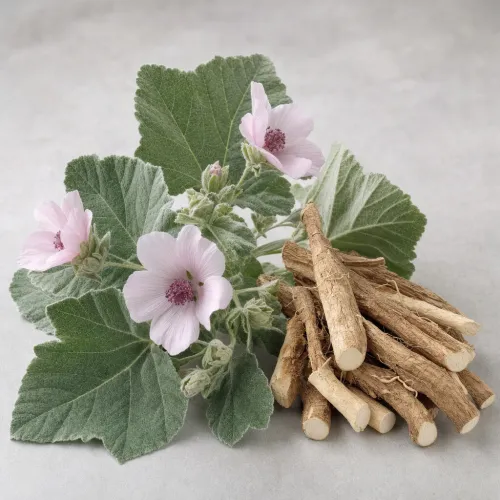
Marshmallow (Althaea officinalis) is the soft, velvety marsh plant whose root once made the original marshmallow sweet. Its Greek name comes from althein, "to heal," and it has been a soothing remedy since Hippocrates.
Key Benefits of Marshmallow
- Extremely rich in mucilage, a slippery plant gel that coats and soothes irritated tissue.
- A classic remedy for dry coughs and sore throats.
- Used to soothe the lining of the stomach and gut — heartburn, gastritis, irritable bowels.
- Applied to the skin as a soothing poultice for burns and irritation.
Marshmallow is the herbalist's great soother: whatever is raw, dry or inflamed, it softens and calms.
Traditional Chinese Medicine (TCM) Perspective
- Chinese Name: Not a classical Chinese herb (closest action: herbs that moisten the Lung and nourish Yin)
- Nature & Flavor: Cool; Sweet
- Meridians Entered: Lung, Stomach, Large Intestine
- Key TCM Actions: Moistens dryness, soothes and protects irritated tissue, calms dry cough.
In TCM terms marshmallow behaves like the sweet, moistening Yin tonics — for a dry, tickly cough, a dry throat and dry, irritated digestion.
- 1 tbsp dried root in 300 ml cool water, steep 4 hours or overnight (cold water draws out the most mucilage), strain and sip.
Before you use this: The mucilage can slow the absorption of medicines taken at the same time — take them an hour apart. It may lower blood sugar. The information on this page is for educational purposes only and does not constitute medical advice. Every person's health is unique — before incorporating any herb or botanical into your routine, especially if you are pregnant, nursing, managing a health condition, or taking prescription medications, please consult a qualified integrative health professional.


Share this with your friends 🙏


