Main page content
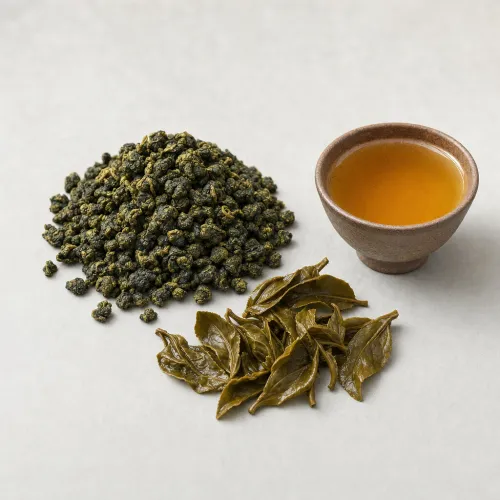
Oolong (Camellia sinensis) is the tea between green and black: the leaves are bruised and partly oxidised, then rolled and roasted, giving a cup that can be floral and light or deep and toasty. It comes from the mountains of Fujian in China and from Taiwan, where tea masters have refined it for centuries.
Key Benefits of Oolong Tea
- Rich in polyphenols — both the catechins of green tea and the theaflavins of black tea.
- Traditionally drunk with rich, fatty meals in southern China to help digestion.
- Studied for supporting fat metabolism and energy use.
- Contains L-theanine, which smooths caffeine into calm alertness.
Oolong is a tea of balance — between green and black, light and dark, stimulation and calm.
Traditional Chinese Medicine (TCM) Perspective
- Chinese Name: Wū Lóng Chá (乌龙茶)
- Nature & Flavor: Neutral to slightly cool; Bitter, Sweet
- Meridians Entered: Heart, Lung, Stomach
- Key TCM Actions: Clears the head, resolves Dampness and phlegm, aids the digestion of greasy food, promotes urination.
Tea (Chá Yè) has been part of Chinese medicine since the Tang dynasty. The partial oxidation of oolong makes it gentler on the Stomach than green tea while keeping its clearing, Damp-draining action.
- 1 tsp of oolong in a small pot, water at 90–95°C, steep 1 minute.
- Re-steep the same leaves 4–6 times; each cup changes.
Before you use this: Contains caffeine — limit it if you are sensitive to caffeine, pregnant, or have trouble sleeping, and avoid it late in the day. The information on this page is for educational purposes only and does not constitute medical advice. Every person's health is unique — before incorporating any herb or botanical into your routine, especially if you are pregnant, nursing, managing a health condition, or taking prescription medications, please consult a qualified integrative health professional.

Share this with your friends 🙏


