Main page content
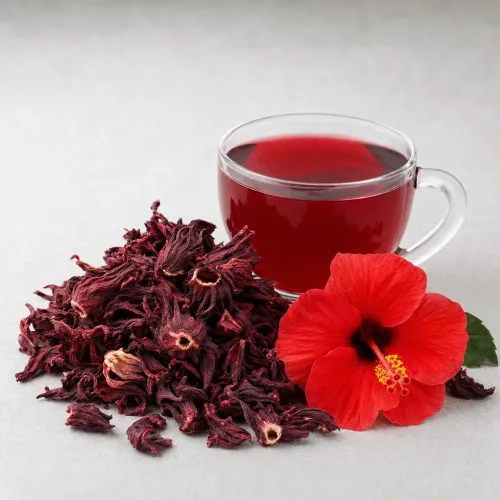
Hibiscus (Hibiscus sabdariffa), also called roselle, is grown across the tropics for its fleshy crimson calyces, which brew a tart, ruby-red tea. It is karkadé in Egypt, agua de jamaica in Mexico, bissap and sobolo in West Africa, and sorrel in the Caribbean — a drink and a folk medicine on three continents.
Key Benefits of Hibiscus
- Lowered systolic blood pressure in adults with mildly high blood pressure who drank three cups a day for six weeks. (McKay et al., 2010)
- Deep red anthocyanins — powerful antioxidants that protect blood vessels.
- Naturally rich in vitamin C and organic acids.
- Traditionally used as a mild diuretic and to cool fevers.
Few herbs are as easy to love as hibiscus: a beautiful, delicious drink that happens to be one of the best-studied herbal supports for the heart and blood vessels.
Traditional Chinese Medicine (TCM) Perspective
- Chinese Name: Méi Guī Qié (玫瑰茄)
- Nature & Flavor: Cool; Sour
- Meridians Entered: Heart, Liver, Kidney
- Key TCM Actions: Clears Heat, generates fluids, quenches thirst, calms rising Liver Yang.
Its sour, cooling nature makes roselle a natural fit for the hot, flushed, high-pressure patterns TCM calls rising Liver Yang — and for hot climates, where it is drunk by the jug.
- 1 tbsp dried hibiscus in 250 ml just-boiled water, 5–10 minutes.
- Three cups a day, hot or iced — the amount used in the blood-pressure trial.
- Add a slice of ginger or a cinnamon stick for a warming winter version.
Before you use this: Hibiscus lowers blood pressure and may lower blood sugar — monitor if you take medication for either. Avoid during pregnancy. It is acidic; rinse your mouth after drinking. The information on this page is for educational purposes only and does not constitute medical advice. Every person's health is unique — before incorporating any herb or botanical into your routine, especially if you are pregnant, nursing, managing a health condition, or taking prescription medications, please consult a qualified integrative health professional.


Share this with your friends 🙏


