

Every cell in your skin runs on a tiny molecule called NAD+. It turns food into energy, it powers the crews that repair sun-damaged DNA, and it switches on the sirtuins, the proteins scientists nicknamed "longevity genes". Here is the twist: as we age, our skin runs lower on NAD+. Young skin is full to the brim; older skin is running on a half-empty tank. The good news is that the tank can be topped up, and much of what refills it is natural: a B vitamin found in everyday food, a flower you can steep as tea, and a few old habits our grandparents never needed a lab to understand. This post shows you what NAD+ does, what the studies found, what people report, and how to feed your skin's power supply starting tonight.
Your skin's battery, explained in one minute
NAD+ stands for nicotinamide adenine dinucleotide. Your body builds it from vitamin B3 (niacin and its cousin niacinamide) and from the amino acid tryptophan. Think of it as the battery inside every cell:
- Energy. Mitochondria, the little power plants in your cells, cannot make energy without it.
- Repair. When sunlight damages DNA, the repair enzymes (called PARPs) burn through NAD+ to fix it.
- Youth signals. Sirtuins, the proteins linked to healthy ageing, only work when NAD+ is around.
Australian researchers measured this in real human skin. In their study of 49 skin samples from newborns to 77-year-olds, NAD+ levels dropped steadily with age in both men and women, while DNA damage climbed. The more the repair enzymes worked, the lower the NAD+ went [1]. A 2023 review in Endocrine Reviews calls NAD+ one of the central molecules in the biology of ageing, while noting there is still much to learn about topping it up in people [2].
So the plan is simple: give your skin more raw material, waste less of it, and help your body make its own.
Niacinamide: vitamin B3 straight onto your skin
Niacinamide is the form of vitamin B3 your skin turns straight into NAD+. It is also one of the most tested ingredients in all of skin care, and the results are a joy to read:
- Fewer lines, fewer spots, less yellowing. In a 12-week, double-blind split-face trial, 50 women aged 40 to 60 put a moisturizer with 5% niacinamide on one side of the face and the same moisturizer without it on the other. The niacinamide side showed significantly fewer fine lines and wrinkles, fewer dark spots, less red blotchiness, smoother texture and less sallow, yellowed skin [3].
- Springier skin. A follow-up report from the same team added a measured improvement in skin elasticity [4].
- Smoother eyes. At Kindai University in Osaka, 30 Japanese women used a 4% niacinamide lotion on the wrinkles around one eye for 8 weeks. 64% saw marked or moderate improvement, significantly more than the untreated side, and only one person stopped because of mild irritation [5].
- A stronger skin barrier. Japanese researchers found that niacinamide raised the skin's own production of ceramides four- to five-fold in skin cells. Put on dry skin, it raised ceramides and cut water loss [6]. Ceramides are the "mortar" between your skin cells, and we lose them with age.
And from the inside? In a landmark trial published in the New England Journal of Medicine, 386 Australians with a history of heavy sun damage took 500 mg of nicotinamide (vitamin B3) twice a day for a year. They developed 23% fewer new skin cancers than the placebo group, and the rough, scaly sun spots called actinic keratoses were 11 to 20% fewer at each check-up. The benefit faded once people stopped taking it [7]. That is vitamin B3 helping skin fix the damage sunlight leaves behind.
The board-certified dermatologists at Doctorly explain why niacinamide became such a favourite in this video, which has passed 1.2 million views:
Chamomile: the bedtime flower that guards your NAD+
Here is the part most NAD+ articles miss. Making more NAD+ is only half the story. Your body also has an enzyme called CD38 that chews NAD+ up, and CD38 grows more active as we age. Researchers at the Mayo Clinic discovered that two common plant compounds block it: apigenin and quercetin. In their 2013 study, apigenin raised NAD+ levels inside cells, and when given to obese mice it raised their NAD+ and improved their blood sugar and fat balance [8].
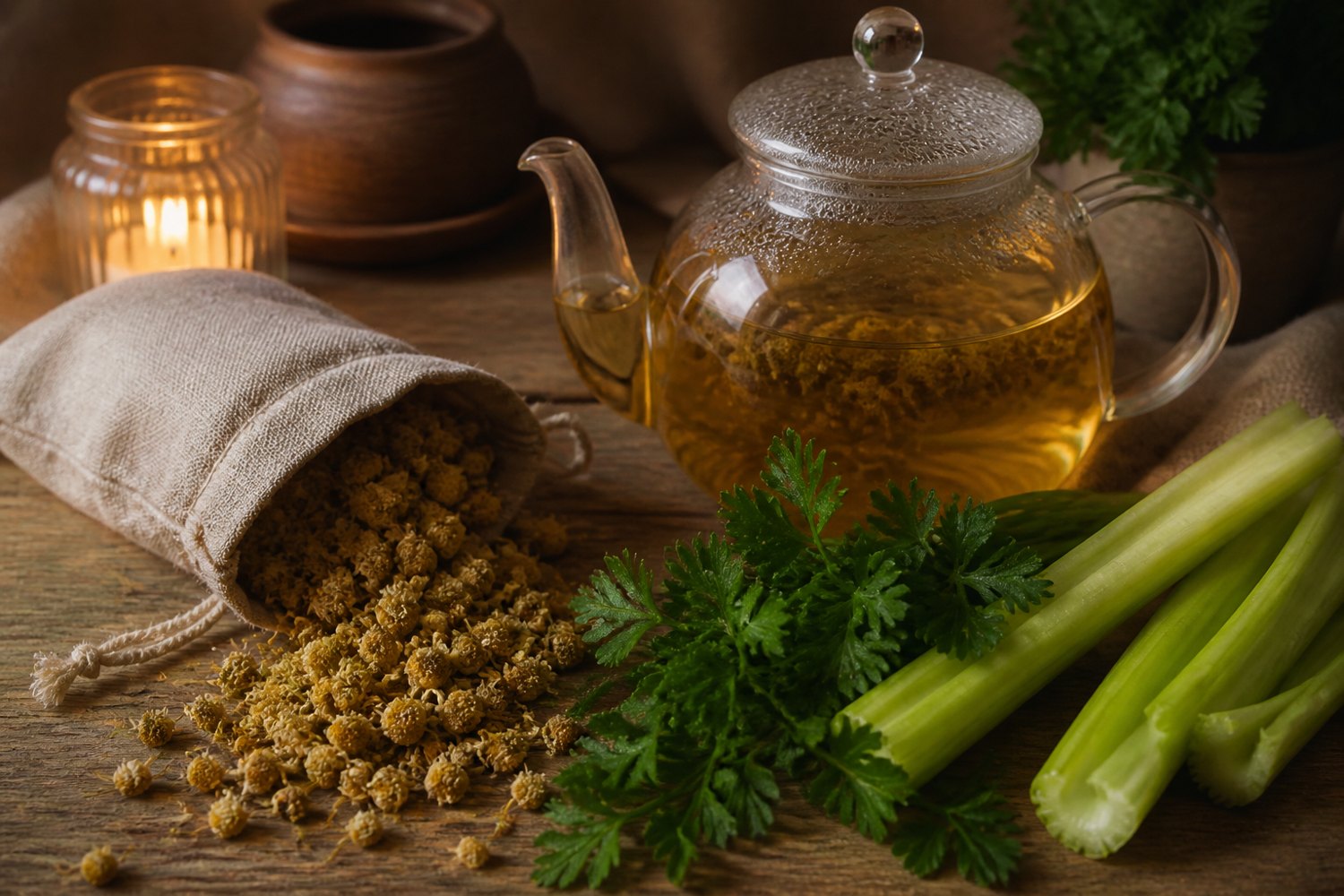
And where do you find apigenin? In the humble chamomile flower, the bedtime tea of ancient Egypt, Greece and Rome, and still the most-loved calming cup in the world. Parsley and celery carry it too. Quercetin lives in onions, apples, capers and green tea. Nutrition scientist Dr. Rhonda Patrick talks through apigenin and the other popular sleep helpers here:
Eat your NAD+ building blocks
Your plate can feed the battery directly. Two newer NAD+ building blocks, NMN (nicotinamide mononucleotide) and NR (nicotinamide riboside), occur naturally in food. A 2023 review in Current Nutrition Reports notes they are found in vegetables, meat and milk, and that the microbes in fermented drinks can make them too [9]. Researchers at the University of Iowa showed that NR is a major NAD+ vitamin in cow's milk [10].
Good everyday sources of vitamin B3 and these building blocks:
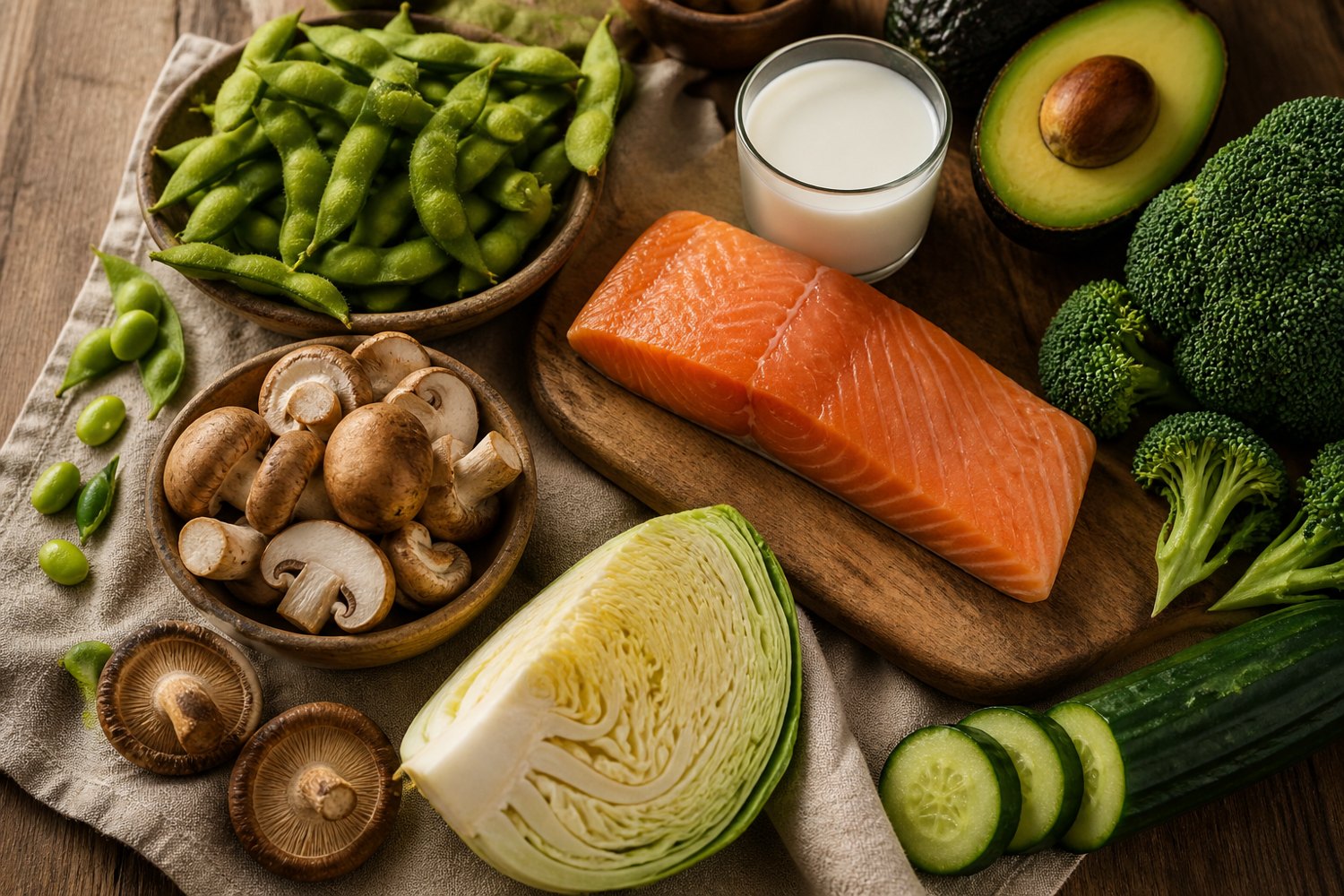
- Vegetables: edamame, broccoli, cabbage, cucumber, avocado and tomatoes.
- Mushrooms: cremini, shiitake and portobello are some of the richest plant sources of niacin.
- Protein foods: salmon, tuna, chicken, turkey, peanuts and whole grains.
- Ferments and milk: yogurt, kefir and fermented drinks.
What about NMN capsules? In a 60-day double-blind trial of 80 healthy middle-aged adults, NMN raised blood NAD+, was well tolerated up to 900 mg a day, and those taking it walked farther in a six-minute walking test than the placebo group. The best results came at 600 mg a day [11]. Skin was not measured in that study, so food first is our advice.
Three free ways to make more of your own
The old traditions never heard the word NAD+, yet they got a lot right. Ayurveda prizes rising early and sleeping with the sun, Chinese medicine teaches moderation at the table, and nearly every faith keeps a season of fasting. Modern research keeps finding the same three levers:
- Move. In a study of human muscle, the body's ability to recycle NAD+ declined with age, and both aerobic exercise and strength training reversed that decline [12]. More circulation also means a brighter face.
- Sleep on a rhythm. The enzyme that recycles NAD+ follows your body clock, so regular bedtimes help it work at its best. Chamomile tea at night does double duty.
- Protect from too much sun. Every sunburn sends the repair crews into overtime and drains NAD+. Shade, a hat and a mineral sunscreen keep the battery for rebuilding instead of firefighting.
What people say after weeks of use
Studies are one lens. Here is what people report in public after trying these. We link every account so you can read it yourself.
- Two months of niacinamide, on camera. YouTuber Danica Revamped filmed her two-month before-and-after results with a 10% niacinamide serum, watched more than 120,000 times (video below).
- Six months, then she stopped. Not every story is a love story. Beauty creator lykarica used a niacinamide serum for six months and explains why she decided to stop on her acne-prone skin, a video seen by nearly 600,000 people. Strong serums are not for every face.
- Four weeks of an NAD+ cream. A reviewer at The Daily Beast tried an NAD+ treatment for four weeks and noticed positive changes with no irritation, while pointing out that four weeks is short for skin care.
- Two weeks, not much yet. A reviewer at Glooshi tested an NAD+ cream for about two weeks and saw little change in brightness or fine lines, noting that the brand's own data covers 12 weeks.
- Eight weeks of niacinamide, spots still there. A tester at Adore Beauty used a 10% niacinamide serum for almost eight weeks and did not yet see her dark spots clearly fade.
The pattern: a calmer, more even, more hydrated face often shows up within weeks. Lines and dark spots move more slowly, and the trials ran 8 to 12 weeks for a reason. Very strong serums (10% and up) are the ones most likely to sting.
6 ways to feed your skin's battery
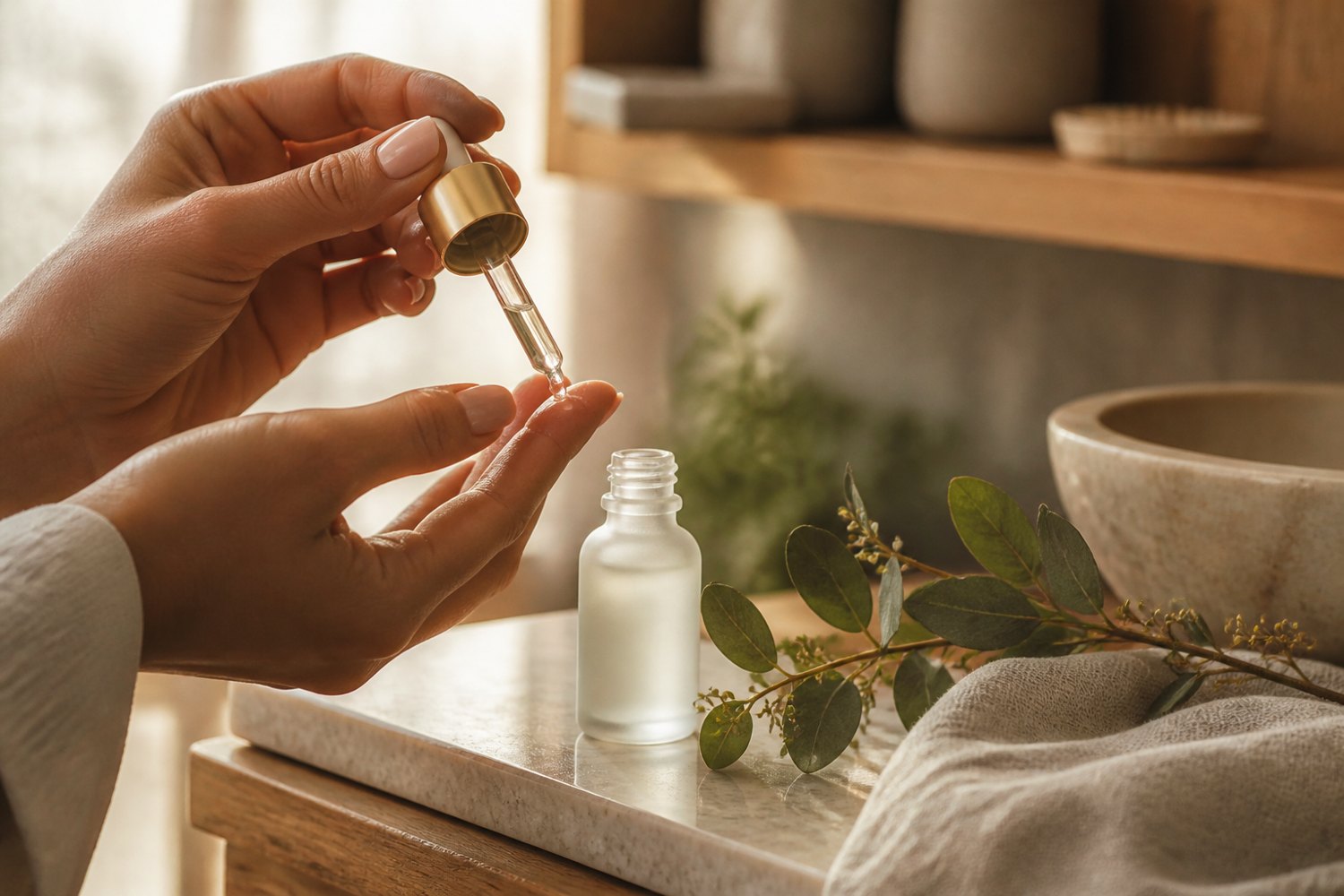
1. A gentle niacinamide serum
The studies used 4 to 5%, and that is the sweet spot. Apply a few drops to clean skin morning and night, before your oil or moisturizer. It plays well with almost everything, including the bakuchiol and rosehip night oil from this series.
2. Chamomile tea at bedtime
Steep a heaped tablespoon of dried chamomile flowers in just-boiled water for 10 minutes, covered so the precious oils stay in the cup. One cup in the evening feeds your NAD+ guard and your sleep at the same time.
3. Chamomile compress for tired skin
Brew a strong cup, let it cool, soak a soft cloth or two cotton pads and lay them on your face or eyes for 10 minutes. A lovely end to a long day.
4. The NAD+ bowl
Our favourite lunch for this: steamed edamame, sautéed shiitake mushrooms, broccoli, sliced avocado and a piece of salmon or tofu over brown rice, with a big handful of chopped parsley on top. Vitamin B3, NAD+ building blocks and apigenin in one bowl.
5. Morning movement
A brisk 30-minute walk or a short strength workout. Your muscles rebuild their NAD+ machinery, and the rush of blood to your face is the original glow.
6. Green tea in the afternoon
Green tea brings quercetin and its own skin-loving polyphenols, and it makes a calmer pick-me-up than a third coffee.
Want the full picture of NAD+ in skin care from a dermatologist? Dr Sam Bunting explains how NAD+ and vitamin C work together:
Good to know
- Niacinamide is not niacin. Niacin (nicotinic acid) can cause a hot, red "flush" when swallowed in large doses. Niacinamide and nicotinamide do not.
- Patch test strong serums. Try a new serum on your inner arm or jawline for a day or two, and start with 5% rather than 10% or more.
- Chamomile is a daisy. If you react to ragweed or other daisy-family plants, go gently with chamomile.
From our apothecary
Our Chamomile Flowers are whole, golden heads for tea, compresses and face steams. You will also find chamomile in our Good Health Tea (with green tea), our Tummy Tamer Tea and our Harmony Spirit Stress Relief Tincture. For your afternoon cup, our Jasmine Green Tea brings the polyphenols, and our Sacred Rock Essential Minerals Tincture includes parsley, another apigenin plant.
More from the Skin Rejuvenation Series
Related reading
- Bakuchiol and Rosehip: The Plant Answers to Retinol
- Herbal Salve for Eczema: 5 Herbs That Calm Irritated Skin Naturally
References
- Massudi H et al. "Age-associated changes in oxidative stress and NAD+ metabolism in human tissue." PLoS One. 2012.
- Bhasin S et al. "Nicotinamide Adenine Dinucleotide in Aging Biology: Potential Applications and Many Unknowns." Endocr Rev. 2023.
- Bissett DL et al. "Topical niacinamide reduces yellowing, wrinkling, red blotchiness, and hyperpigmented spots in aging facial skin." Int J Cosmet Sci. 2004.
- Bissett DL et al. "Niacinamide: A B vitamin that improves aging facial skin appearance." Dermatol Surg. 2005.
- Kawada A et al. "Evaluation of anti-wrinkle effects of a novel cosmetic containing niacinamide." J Dermatol. 2008.
- Tanno O et al. "Nicotinamide increases biosynthesis of ceramides as well as other stratum corneum lipids to improve the epidermal permeability barrier." Br J Dermatol. 2000.
- Chen AC et al. "A Phase 3 Randomized Trial of Nicotinamide for Skin-Cancer Chemoprevention." N Engl J Med. 2015.
- Escande C et al. "Flavonoid apigenin is an inhibitor of the NAD+ ase CD38: implications for cellular NAD+ metabolism, protein acetylation, and treatment of metabolic syndrome." Diabetes. 2013.
- Alegre GFS, Pastore GM. "NAD+ Precursors Nicotinamide Mononucleotide (NMN) and Nicotinamide Riboside (NR): Potential Dietary Contribution to Health." Curr Nutr Rep. 2023.
- Trammell SA et al. "Nicotinamide Riboside Is a Major NAD+ Precursor Vitamin in Cow Milk." J Nutr. 2016.
- Yi L et al. "The efficacy and safety of β-nicotinamide mononucleotide (NMN) supplementation in healthy middle-aged adults: a randomized, multicenter, double-blind, placebo-controlled, parallel-group, dose-dependent clinical trial." Geroscience. 2023.
- de Guia RM et al. "Aerobic and resistance exercise training reverses age-dependent decline in NAD+ salvage capacity in human skeletal muscle." Physiol Rep. 2019.
These statements have not been evaluated by the Food and Drug Administration. Our products are not intended to diagnose, treat, cure, or prevent any disease.


