
Main page content
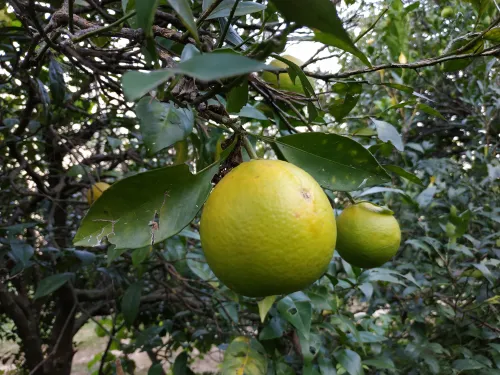
Sweet orange essential oil, cold-pressed from the fresh peel of Citrus sinensis, is the highest-volume produced essential oil in the world — and among the most therapeutically versatile. Unlike many essential oils that require careful dilution, orange oil's safety profile is remarkably broad, making it accessible, effective, and appropriate for diverse formulation applications from face care to body products to aromatherapy diffusion.
Key Benefits of Orange Essential Oil
- Composed of 90-95% d-limonene — one of the most extensively studied aromatic terpenes, with documented anti-inflammatory, antioxidant, and chemopreventive properties across hundreds of published studies. (PubMed reference)
- Multiple clinical trials confirm that inhaling orange essential oil significantly reduces anxiety and improves mood — one of the best-evidenced aromatics for psychological wellbeing.
- Provides natural antimicrobial activity against Staphylococcus, E. coli, Candida, and many other pathogens — contributing to both skin health and formulation preservation.
- A powerful natural solvent and degreaser — d-limonene dissolves oils and sebum effectively, making orange oil useful in cleansing and purifying formulations.
- Rich in myrcene, alpha-pinene, and sabinene alongside limonene — minor terpenes that contribute to the oil's full anti-inflammatory and antioxidant breadth.
- Adds a fresh, bright, sweet citrus note to any blend — universally appealing, mood-lifting, and radiantly natural in character.
- One of the safest essential oils for broad formulation use — low sensitization risk, non-phototoxic, and well-tolerated across all skin types.
Sweet orange essential oil is the approachable powerhouse — genuinely therapeutic, beautifully aromatic, and remarkably safe. Its d-limonene profile places it among the best-researched botanicals for both skin health and emotional wellbeing.
Traditional Chinese Medicine (TCM) Perspective
Orange essential oil concentrates the aromatic, Qi-moving properties of the orange peel. In TCM aromatherapy, its bright, uplifting scent directly addresses Liver Qi stagnation — the most common pattern underlying low mood, digestive tension, and emotional constraint in modern urban life.
- Chinese Name: Related to Chen Pi You (陈皮油) / Cheng You (橙油)
- Nature & Flavor (functional): Warm; Pungent, Sweet
- Meridians Entered (functional): Liver, Spleen, Stomach, Lung
- Key TCM Actions: Spreads Liver Qi, harmonizes the Spleen and Stomach, transforms Phlegm-Damp, lifts mood and relieves depression, calms anxiety, aids digestion.
The limonene-dominant terpene profile of orange essential oil is what delivers its anxiolytic, antidepressant, and digestive-stimulating effects — all of which correspond directly to the TCM actions of Chen Pi (陈皮) on the Liver-Spleen-Stomach axis. When Liver Qi stagnates into the Stomach, digestive symptoms emerge alongside emotional symptoms — orange oil addresses both simultaneously through its aromatic unblocking action.
Aromatherapy inhalation studies use orange essential oil at concentrations of 2–4 drops diffused in 100 ml water over 30–60 minutes to produce measurable anxiolytic effects. For topical application, dermatology and aromatherapy guidelines recommend a dilution of 1–2% in a carrier oil (1–2 drops per teaspoon of carrier) for body use, or 0.5–1% for facial application. Komori et al. (1995) demonstrated antidepressant effects from citrus fragrance inhalation sufficient to reduce antidepressant medication dependency in a clinical setting.
Uplifting Orange Aromatherapy & Tension-Relief Body Oil
- Measure 30 ml (6 teaspoons) of sweet almond or fractionated coconut oil into a clean amber glass bottle.
- Add 9–12 drops of sweet orange essential oil (1–2% dilution) — add 4 drops of lavender essential oil if desired for enhanced anxiolytic effect.
- Cap, swirl gently to blend, and perform a patch test on the inner forearm — wait 24 hours before full use.
- Apply to pulse points, the back of the neck, or shoulders with slow circular massage strokes — inhale deeply from cupped palms for immediate mood benefit.
- For diffuser use: add 3–4 drops to your diffuser reservoir and run for 30–60 minutes in a ventilated room.
Research note: Sweet orange essential oil is non-phototoxic unlike cold-pressed lime or bergamot — however, avoid applying undiluted oil directly to skin. Always dilute in a carrier before topical use. Keep out of reach of children and avoid direct contact with eyes and mucous membranes.
Before you use this: Orange essential oil must always be diluted in a carrier oil before topical application — use at 1–2% for body (1–2 drops per teaspoon of carrier) and 0.5–1% for the face; applying undiluted essential oil directly to skin may cause irritation or sensitization. Always perform a patch test on a small area of skin before broader use, especially if you have sensitive or reactive skin. While sweet orange essential oil is non-phototoxic, avoid contact with eyes, inner ears, and mucous membranes; if accidental contact occurs, flush thoroughly with a fixed carrier oil (not water) and seek medical attention if irritation persists. Keep out of reach of children and pets — even safe essential oils can be harmful if ingested in quantity. The information on this page is for educational purposes only and does not constitute medical advice. Every person's health is unique — before incorporating any herb or botanical into your routine, especially if you are pregnant, nursing, managing a health condition, or taking prescription medications, please consult a qualified integrative health professional.


