
Main page content
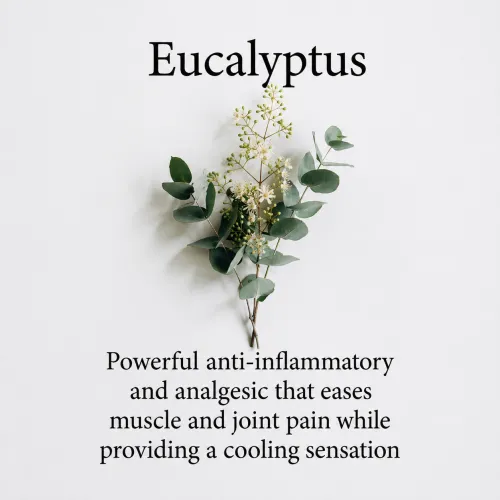
Eucalyptus (Eucalyptus globulus and related species) is one of the world's most widely used medicinal plants — a towering Australian native whose oil has been adopted by traditional medicine systems globally for its extraordinary respiratory, analgesic, and antimicrobial properties. The primary active compound, 1,8-cineole (eucalyptol), is one of the most extensively studied phytochemicals in the world, with a comprehensive body of research supporting its therapeutic applications.
Key Benefits of Eucalyptus Essential Oil
- 1,8-Cineole (eucalyptol) is the dominant active compound — it inhibits inflammatory cytokines, opens bronchial airways, and has demonstrated analgesic properties in multiple controlled studies. (PubMed reference)
- Clinically validated as a topical analgesic and anti-inflammatory — eucalyptus oil applied to muscles and joints reduces pain scores and improves function in arthritis and myalgia studies.
- Provides a characteristic cooling, mentholated sensation on the skin that creates immediate perceived pain relief through TRPM8 receptor activation — the same mechanism as menthol.
- Powerful natural antimicrobial — effective against a wide range of bacteria (including MRSA), fungi, and respiratory viruses in laboratory studies.
- In aromatherapy, eucalyptus is a premier respiratory support — opening airways, reducing congestion, and supporting comfort during upper respiratory conditions.
- A recognized insect repellent — lemon eucalyptus (OLE) is EPA-registered as an effective repellent against mosquitoes, ticks, and other insects.
- The clean, sharp, medicinal scent is universally associated with invigoration, clarity, and deep breathing — a powerful mental reset in aromatherapy applications.
Eucalyptus is one of the great workhorse botanicals — broad-spectrum, scientifically credible, and genuinely beloved for its unmistakable refreshing scent. Whether addressing pain, antimicrobial needs, or respiratory support, it delivers with consistent, reliable potency.
Traditional Chinese Medicine (TCM) Perspective
Eucalyptus (Àn Shù, 桉树) has been integrated into modern Chinese herbal practice for its powerful Lung-opening, Wind-dispersing properties. It is used in Chinese patent medicines and liniments for respiratory conditions and musculoskeletal pain.
- Chinese Name: An Ye (桉叶) — Eucalyptus Leaf
- Nature & Flavor: Cool; Pungent, Bitter
- Meridians Entered: Lung, Liver
- Key TCM Actions: Disperses Wind-Cold and Wind-Heat from the Lung, opens the Lung and benefits breathing, clears Heat and resolves toxins, relieves pain from Wind-Damp Bi syndrome, opens the sensory orifices.
The 1,8-cineole (eucalyptol) content of eucalyptus oil directly supports the Lung's "diffusing and descending" (宣肃) functions — the two complementary movements by which the Lung distributes Wei Qi across the body's surface and moves fluids downward. Topically in liniments, eucalyptus provides the penetrating, cooling-then-warming analgesic action central to Chinese medicine's Wind-Cold-Damp pain formulas.
Eucalyptus essential oil is not for internal consumption. Its therapeutic delivery method is inhalation. Juergens et al. (2003, 2004) RCTs demonstrated that 1,8-cineole (the primary compound) at inhaled doses reduces airway inflammation, improves mucociliary clearance, and reduces oral corticosteroid requirements in asthma patients. The effective delivery is steam inhalation for 10 minutes.
Therapeutic Steam Inhalation
- 3–4 drops eucalyptus essential oil in a bowl of 500 ml just-boiled water.
- Drape a towel over your head, close your eyes, and inhale slowly through the nose for 5–10 minutes.
- Repeat 2× daily during respiratory illness or congestion.
Research note: Do not ingest eucalyptus essential oil — even 3.5 ml has been reported to cause seizures in children. The therapeutic window for inhalation is well-established; internal use is not. For those preferring tea, Eucalyptus globulus leaf (not the essential oil) can be steeped as a mild respiratory herb at 1–2 g dried leaf per cup, but the essential oil itself is strictly an inhalation and topical medicine.
Before you use this: Critical: This recipe is inhalation only — eucalyptus essential oil must never be ingested. Even 3.5 ml has caused seizures in children; keep the oil entirely out of reach of children. Do not apply near the face of infants or young children — menthol and cineole can cause laryngospasm and respiratory depression. Do not use steam inhalation during an active asthma attack — the hot, concentrated steam can trigger bronchospasm. Those with epilepsy should avoid concentrated eucalyptus inhalation without medical clearance. The information on this page is for educational purposes only and does not constitute medical advice. Every person's health is unique — before incorporating any herb or botanical into your routine, especially if you are pregnant, nursing, managing a health condition, or taking prescription medications, please consult a qualified integrative health professional.


